Have a demolition emergency? Call now.

Pittsburgh Demolition Contractor

Demolition services in Pittsburgh for commercial and residential buildings, dumpster rental for cleanouts, and excavation services to start new construction projects!

GET A FREE QUOTE

SERVING PITTSBURGH'S DEMOLITION AND EXCAVATION NEEDS FOR 30 YEARS!

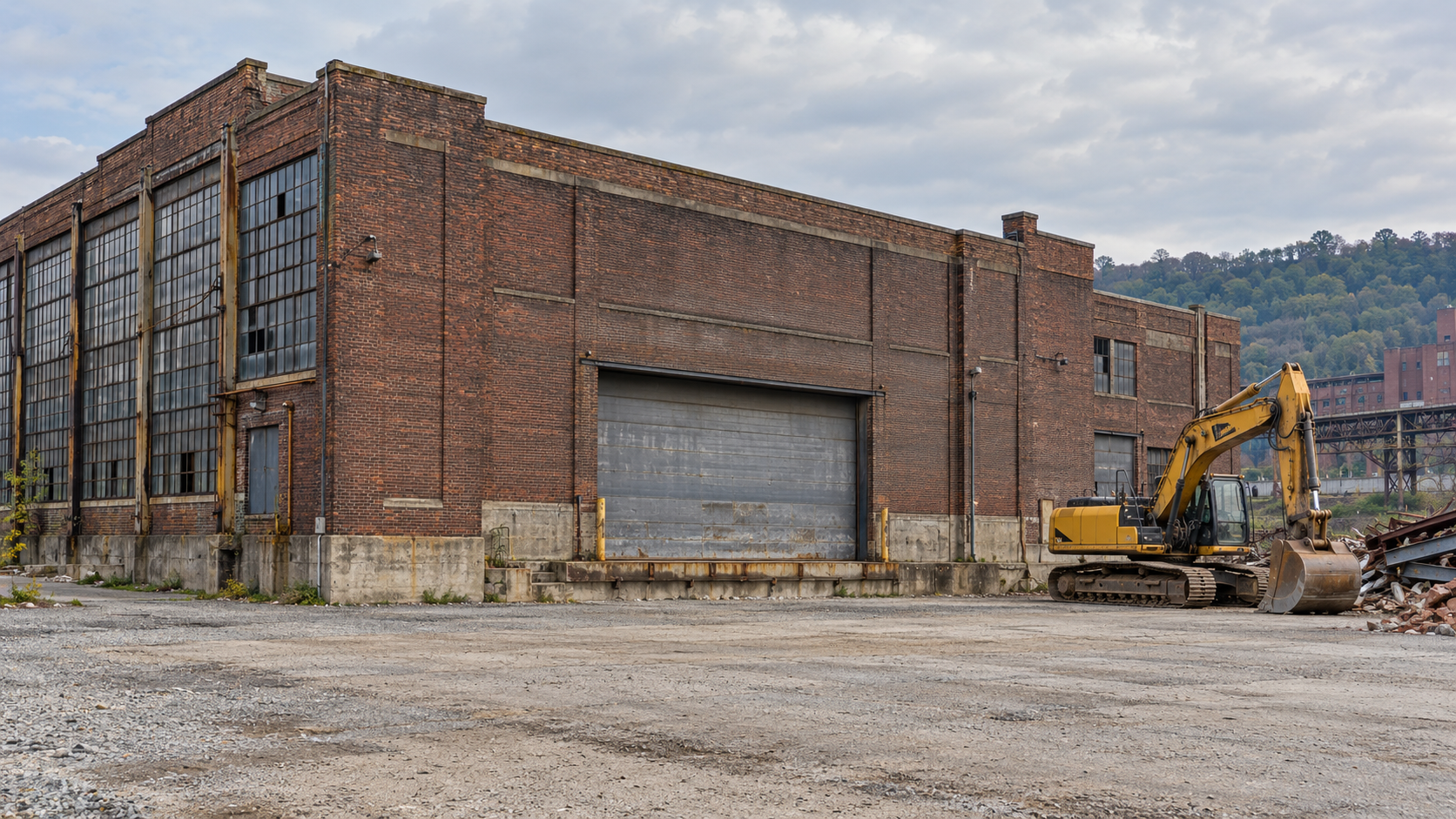
Commercial building that needs demolished

COMMERCIAL DEMOLITION


We provide professional demolition services to businesses in the Pittsburgh area, including interior and exterior jobs, and more. Our experienced team will work with you every step of the way to ensure your project is completed to the highest standards. 

Commercial Services
residential building that needs demolished

RESIDENTIAL DEMOLITION


From small residential projects like tearing out a wall or demolishing an old shed to larger jobs like knocking down a three bedroom house, Schaaf Excavating Contractors, Inc. has the expertise and equipment to get the job done right, and to your satisfaction.


Residential Services

Discover Why Pittsburgh Chooses Schaaf

All our work is done quickly, correctly and safely for best results.

Experienced team, specialized equipment, no shortcuts.

Customer Service and Satisfaction is our top priority on every job.

Get A Demolition Quote For Pittsburgh & The Surrounding Areas


Pittsburgh, PA

Scott Township, PA

New Kensington, PA

Washington, PA

Dormont, PA

Aliquippa, PA

Jefferson Hills, PA

McKeesport, PA

Monroeville, PA

North Versailles, PA

Cranberry, PA

Wilkinsburg, PA

And more!

EXCAVATION & DEMOLITION SERVICES


TOTAL STRUCTURE

DEMOLITION

SERVICES

TOTAL STRUCTURE

DEMOLITION

SERVICES

If you have a commercial or residential building in the Pittsburgh area that needs to be completely demolished, Contact Schaaf for a quote today!

Total Demolition Total Demolition
residential building about to be totally demolished
residential building in the middle of demolition services

SELECTIVE STRUCTURE

DEMOLITION

SERVICES

If your commercial or residential building needs to be only partially demolished, and you want to keep a part of it, Schaaf can help! Call today!

Selective Demolition
selective demolition for homes that are close together
selective demolish complete and ready for clean up

INTERIOR DEMOLITION SERVICES

INTERIOR DEMOLITION SERVICES

If you need a commercial or residential building gutted to prepare for a new interior, expert interior demolition services by Schaaf are second to none. Call us today for a free quote!

Interior Demolition Interior Demolition
interior commercial demolition
interior demolition remains

EXCAVATION

SERVICES

Excavation Services: We specialize in excavation services for residential and commercial projects, including land clearing, driveway installation, storm water management systems, and more. Our experienced team will work with you every step of the way. Call today!

Excavation
beginning of excavation services
man made lake completely dug out

DUMPSTER

RENTAL

SERVICES

We provide dumpster rental services for any size job in the Pittsburgh area, from small residential projects to large commercial jobs. Our professional staff will help you select the right size dumpster for your needs and ensure that it gets to you on time.

Learn More Dumpster Rental
empty dumpster dropped off as rented to the customer
full dumpster ready to be picked up from the customer

Blog Posts

By Tim Schaaf • September 24, 2026
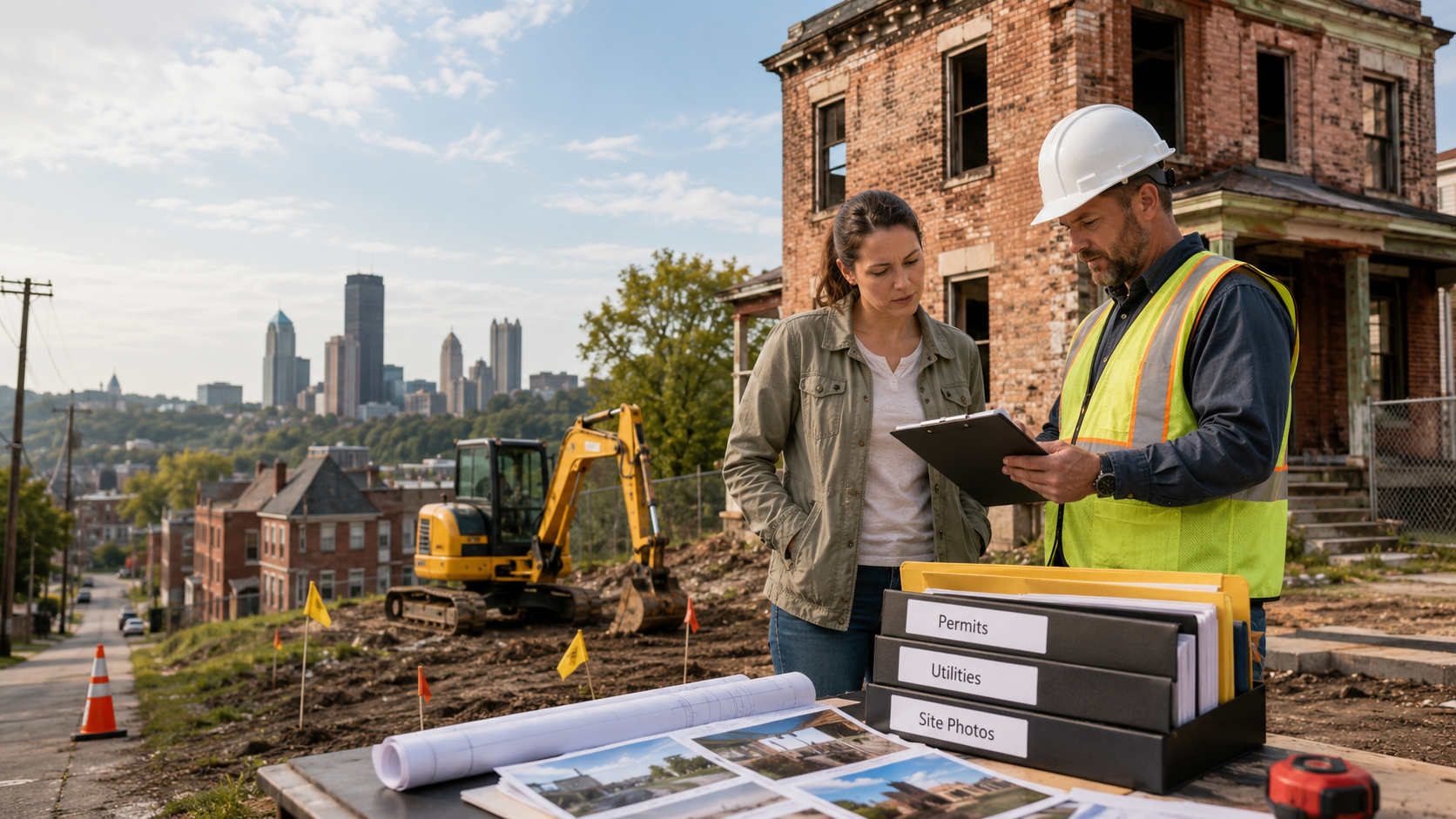
An older Pittsburgh building can look like a straightforward tear-down from the street. In practice, the structure itself is only one part of the demolition plan. Older homes, row houses, commercial buildings, and masonry structures may sit close to neighboring properties, on narrow lots, along steep grades, or near sidewalks, utilities, retaining walls, and active streets. The building may also contain aging materials or structural conditions that cannot be fully understood until the property is evaluated. That is why old building demolition in Pittsburgh often starts with planning rather than equipment . Access, neighboring structures, utilities, permits, environmental requirements, debris handling, and the property's future use can all affect how demolition should proceed. This article provides a practical overview for property owners. It is not a substitute for guidance from municipal officials, engineers, environmental professionals, or other specialists who may be required for a particular project. Why Are Older Pittsburgh Buildings More Complicated to Demolish? The short answer is that the building and the surrounding site often create challenges at the same time. Pittsburgh properties can include brick and masonry construction, narrow side yards, attached buildings, basements, retaining walls, steep grades, alleys, overhead utilities, and limited space for trucks or equipment. A demolition contractor therefore has to evaluate more than the walls and roof. The plan may need to answer several questions before demolition begins: What can equipment safely reach? Where will debris go? Is another building structurally connected? Are utilities properly addressed? What permits or environmental reviews apply? What condition should the site be left in afterward? Those questions matter most when demolishing old houses in Pittsburgh or removing older commercial structures in dense neighborhoods. How Do Shared Walls and Nearby Buildings Affect Demolition? Attached buildings and closely spaced structures require a controlled demolition approach. A row house, for example, may share a party wall with the property next door. Even technically separate buildings can sit close to neighboring foundations, retaining walls, garages, fences, or other improvements. The City of Pittsburgh's demolition permit information specifically recognizes work involving party-wall structures and adjacent-structure repair. That is one reason the condition of neighboring structures can factor into demolition planning. A contractor may need to determine what is connected, what must remain supported, how to remove material, and the sequence of work. Depending on the structure, selective removal or additional structural review may also be appropriate. For row house demolition in Pittsburgh , demolition is often better understood as controlled removal rather than simply applying more force. Why Do Old Brick, Stone, and Masonry Buildings Need Careful Planning? Brick, block, stone, concrete, plaster, wood framing, chimneys, and older foundations can all affect demolition methods and debris handling. The main concern is not simply that a building is old. It is that existing materials may not be in the condition a contractor expects from an exterior inspection alone. Mortar can deteriorate. Previous renovations may have modified portions of a wall. Chimneys or parapets may have weakened. Basement walls and foundations may interact with neighboring soil, pavement, or retaining structures. Once demolition begins, removing one section of a structure can also change how remaining sections are supported. That makes a site review particularly useful for masonry building demolition . The contractor can evaluate visible conditions, surrounding structures, access, debris weight, and the demolition sequence before deciding how to remove the building. How Do Pittsburgh Hillsides and Tight Lots Affect Equipment Access? On a confined property, equipment access can shape the entire demolition plan. A site may have a steep driveway, no usable driveway, a narrow alley, limited street frontage, overhead wires, mature trees, or little space between the building and neighboring property. Trucks and dumpsters also need appropriate places to enter, load, turn, and leave. Ground and drainage conditions can matter as well. Equipment placement that works on an open, level lot may not be practical on a steep or confined property. Schaaf's existing guide to demolishing buildings on tight lots in Pittsburgh explains that limited space can affect equipment selection, material removal, debris staging, and protection of nearby structures. For that reason, planning a tight-lot demolition in Pittsburgh should include equipment access, truck access, staging, debris removal, cleanup, and the site's condition after the structure is gone. Planning to remove an older home, commercial building, or damaged structure in Pittsburgh? Schaaf Excavating Contractors can review the site and help identify access, demolition scope, debris, utility, and site-condition questions to address before work begins. Schaaf currently provides residential, commercial, selective, interior, excavation, and dumpster-related services through its Pittsburgh-area website. Why Must Utilities Be Addressed Before Demolition? Demolition can involve electric, gas, water, sewer, and other services connected to the property. Older properties may also have service routes or site conditions that are not obvious from a visual inspection. That makes verification and coordination important before structural removal begins. The City of Pittsburgh includes utility disconnect as a work scope associated with demolition permits when utility services to the property are being disconnected. For property owners, the main point is simple: utility coordination belongs in the planning stage. Don't treat it as something to figure out after equipment reaches the site. Utility requirements can also affect scheduling, especially when demolition cannot proceed until the appropriate services and documentation are in place. What Permits Are Required for Demolition in Pittsburgh? For projects within the City of Pittsburgh, complete and partial building demolition require a demolition permit. The City distinguishes among work types and scopes such as primary-structure demolition, adjacent-structure repair, site work, and utility disconnect. For work limited to non-structural interior demolition , Pittsburgh currently directs applicants to use a Building and Development Application. Permit requirements matter because the scope of a demolition project differs from one property to another. A detached structure on an open lot can present different questions from an attached row house, a commercial property, or a building next to a public sidewalk. Requirements can also differ outside Pittsburgh city limits, so property owners should confirm the rules that apply in the municipality where the property is located. An experienced demolition contractor in Pittsburgh can help property owners identify which project details must be addressed before scheduling work, while municipal officials remain the authoritative source for permit requirements. How Can Asbestos and Other Older Materials Affect Demolition? An older building should not automatically be assumed to contain asbestos, but its age also should not be used as a reason to skip environmental review. Allegheny County Health Department regulates asbestos-related demolition and renovation activity. Its guidance says that facility demolitions subject to its regulations require asbestos notification even when no asbestos is present, and an asbestos survey is attached to that notification. The County also identifies distinctions and exemptions involving certain residential properties, including structures with four or fewer dwelling units in some circumstances and private homeowners performing work on their own homes. Because those rules depend on the property and project, owners should confirm what applies rather than assuming every old building follows the same process. Other conditions may also need investigation depending on the site, including lead-containing coatings, older insulation, flooring or roofing materials, abandoned tanks, or other environmental concerns. Verify their presence rather than assume it. When testing, notification, abatement, or specialist review is required, completing that work before demolition can affect both the project sequence and timeline. Why Is Debris Removal Part of the Demolition Plan? Removing the building creates another challenge: disposing of construction waste that made up the building. Older structures can produce mixed loads containing brick, concrete, block, plaster, roofing, lumber, metal, and other materials. Masonry in particular can create heavy debris loads. On a large open site, material may have room to be staged before hauling. A narrow city property may provide much less space, requiring closer coordination between demolition and debris removal. Dumpster or truck placement must also account for the property layout, street access, neighboring buildings, and the space equipment needs to operate. Once structural removal is complete, the property may also require additional work such as foundation removal, backfilling, grading, or excavation depending on the project scope and what the owner plans to do with the site next. How Does Demolition Planning Protect Neighbors and Public Areas? A demolition site does not exist in isolation, particularly in a dense Pittsburgh neighborhood. Workers may be operating near sidewalks, parked vehicles, neighboring homes, businesses, fences, streets, or pedestrian routes. Dust and debris must also remain controlled within the work area. The demolition plan may therefore need to consider site access, barriers, dust management, debris containment, equipment movement, hauling routes, and how to protect neighboring property during the work. Communication can matter as well. When access, parking, sidewalks, or neighboring structures may be affected, identifying those issues early gives the contractor and property owner more time to coordinate appropriate measures. For older urban properties, professionalism often shows up in these details. The goal is not simply to remove the structure. It is to manage the entire work area from the start of demolition through final cleanup. When Does Interior Demolition Make More Sense Than Full Demolition? Not every outdated or damaged building needs complete removal. Interior demolition removes selected interior materials or components so that part or all of the exterior structure can remain. Depending on the project, that can include renovation preparation, commercial strip-outs, removal of damaged finishes, or selective removal of interior spaces. Partial or selective demolition can also preserve portions of a structure while removing an addition or another defined area. Full demolition removes the primary structure entirely. The correct approach depends on the owner's goal and the building's condition. If a property is being renovated, adapted for a new use, or only partly damaged, it makes sense to define what should remain before determining how much demolition is necessary. Schaaf currently has a dedicated interior demolition service page for both residential and commercial projects. What Should Property Owners Prepare Before Demolishing an Older Building? A contractor can evaluate the physical site, but property owners can make the first conversation more productive by gathering the information they already have. Before requesting a site review: Gather available ownership and property documents. Take current photos of the structure and surrounding property. Collect any known code notices or municipal correspondence. Locate available utility account or service information. Make note of narrow access, steep grades, alleys, gates, wires, or other site constraints. Share known fire, water, structural, or other building damage. Explain what you want the property to be used for after demolition. Contact a demolition contractor for an on-site review before assuming the project method, timeline, or cost. Work With a Pittsburgh Demolition Contractor That Understands Older Structures Demolishing an old building in Pittsburgh requires more than deciding a building needs to come down. A contractor may need to account for masonry conditions, attached structures, access limitations, utilities, environmental requirements, debris handling, public areas, foundations, grading, and what the owner intends to do with the property afterward. That planning is especially important for row houses, tight-lot residences, older commercial buildings, hillside structures, or sites surrounded by active homes and businesses. Schaaf Excavating Contractors provides residential and commercial demolition services in the Pittsburgh area, along with interior demolition, excavation, and dumpster rental services. Before assuming an older building is a simple tear-down, contact Schaaf Excavating Contractors to request a demolition site review . The team can discuss the project scope and evaluate practical concerns such as access, neighboring structures, debris handling, utilities, and the condition the property should be left in after demolition. Frequently Asked Questions About Older Building Demolition in Pittsburgh Why are old Pittsburgh buildings harder to demolish? Older Pittsburgh buildings can require additional planning when they sit on tight lots, steep grades, or close to neighboring structures. Masonry construction, basements, shared walls, utilities, limited equipment access, debris handling, permitting, and environmental requirements can also affect the demolition plan. Can a Pittsburgh row house or attached building be demolished? Attached buildings can be demolished, but the approach depends on the site. A contractor may need to evaluate party walls, adjacent foundations, structural connections, access, debris containment, and the demolition sequence before work begins. Pittsburgh's demolition permit process includes provisions for party-wall structures and adjacent-structure repair. Does an old building need asbestos testing before demolition? Not simply because the building is old. Allegheny County requirements depend on the property type, its use, and the project. ACHD guidance says facility demolitions subject to its rules require notification and an asbestos survey, while certain small residential properties and homeowner situations may be treated differently. Property owners should confirm the requirements for their specific project before demolition begins. Do I need a demolition permit in Pittsburgh? The City of Pittsburgh requires demolition permits for complete and partial demolition of residential or commercial buildings and structures. Non-structural interior demolition is currently handled through a Building and Development Application. Requirements depend on the project scope, and projects outside the City of Pittsburgh may follow different municipal rules. What makes hillside or tight-lot demolition more complicated? Limited space or steep terrain can affect where equipment can operate, where trucks or dumpsters can be positioned, how debris leaves the property, and how the site is graded or cleaned afterward. Narrow streets, alleys, trees, overhead utilities, neighboring buildings, and drainage can also influence the demolition approach. What happens after an old building is demolished? Next steps depend on the project scope and the property's future use. They can include debris removal, foundation work, backfilling, grading, excavation, cleanup, or preparing the site for future construction. The required finish condition should be discussed before demolition begins.

By Timothy Schaaf • August 19, 2026
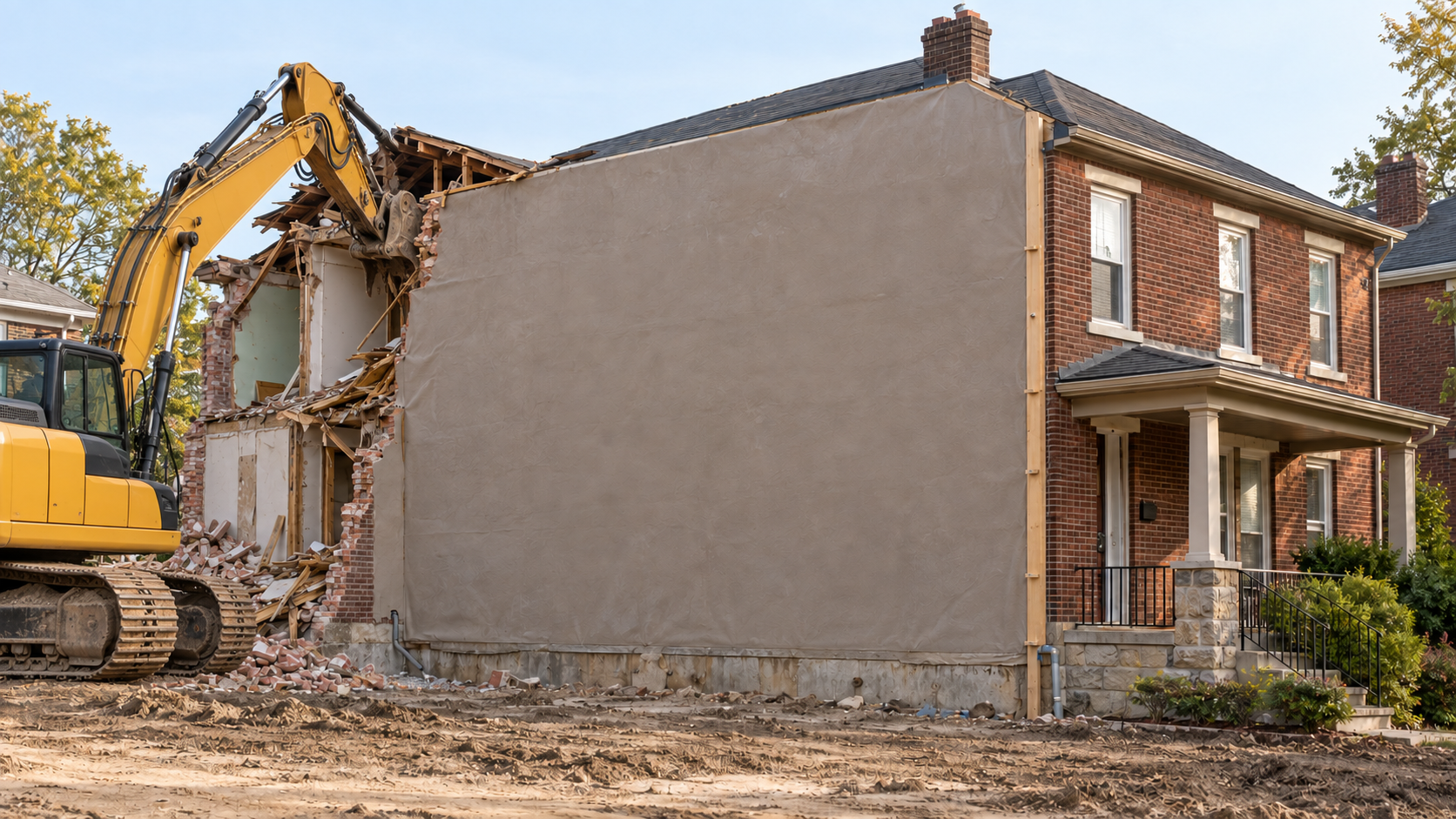
Yes, it may be possible to demolish one half of a duplex while leaving the adjoining half standing. However, partial duplex demolition requires more planning than removing a detached house because the two sides may share walls, structural components, foundations, roofing, utilities, or drainage systems. Before demolition begins, the property needs to be evaluated to determine what is connected, what must remain, and how to protect the adjoining structure. In Pittsburgh, site conditions can add another challenge. Narrow residential lots, nearby buildings, retaining walls, steep terrain, overhead utilities, and limited equipment access can all affect the demolition plan. Why Partial Duplex Demolition Requires More Planning A duplex can look like two separate houses from the outside but may not be structurally independent. Depending on how the building was constructed, the two sides may share or connect through: Walls or masonry Roof framing Floor systems Foundations Water and sewer lines Electrical or gas service Drainage systems That means demolishing one side is not simply a matter of removing everything up to the property line. The demolition plan has to account for what supports the remaining structure, how shared components will be separated, and what will be exposed once the adjoining half is gone. Schaaf Excavating Contractors provides residential selective demolition services for Pittsburgh-area projects where only part of a home needs to be removed while another portion remains. What Happens to the Shared or Party Wall? The wall separating the two sides of a duplex may need to remain after you demolish one side. Often called a party wall , this wall can serve different purposes depending on the property's construction. It may support portions of the roof, floors, masonry, or other structural components. Removing the adjoining half can also turn what was once an interior or protected wall into an exterior surface. That can create issues involving: Structural support Exposed framing or masonry Water intrusion Insulation Exterior finishing Temporary weather protection Roof or floor connections For that reason, demolishing one side and properly protecting the remaining side are related but separate parts of the project. When Is a Structural Engineer Needed? A structural evaluation may be appropriate when removing one half of the duplex could affect the other's support or stability. Conditions that may require closer review include shared load-bearing walls, interconnected roofing, deteriorated masonry, foundation movement, fire damage, major structural deterioration, or uncertainty about how the building was originally constructed. A structural engineer can identify which components support the remaining structure and whether the project should include temporary stabilization, reinforcement, or another structural solution. Property owners should not assume that a dividing wall means the two halves are structurally independent. Confirm any engineering, permitting, or municipal requirements for the specific property before work begins. Property owners still gathering information can also review Schaaf's guide on how to get started with a demolition project , which covers project documents, utility information, site conditions, photos, and other details that can help before requesting an estimate. How Is the Remaining Half Protected During Demolition? Partial duplex demolition generally requires a more controlled approach as crews get closer to the remaining structure. The exact method depends on the building and site, but the work may include controlled sequencing, selective demolition, smaller equipment, hand demolition, or temporary stabilization. Controlled Demolition Sequencing The order in which crews remove building components matters. Crews need to avoid removing one section in a way that unexpectedly affects another. Selective Demolition Near the Shared Wall Selective demolition involves intentionally removing certain materials while preserving nearby components. Instead of approaching the entire building in the same way, crews may work more carefully around the party wall, roof connections, masonry, or other sensitive areas. Schaaf specifically offers selective demolition for homes when a homeowner needs to remove only part of a structure while keeping the remaining portion intact. Smaller Equipment or Hand Work Large equipment can be efficient where space permits, but tighter areas may require smaller machines or manual demolition for better control. The goal is to remove the intended structure without creating unnecessary movement or damage near the adjoining property. What Happens to Shared Utilities? Identify utilities before structural demolition begins so service to the remaining property isn't unintentionally interrupted. Potential shared or interconnected systems can include: Electrical service Natural gas Water Sewer Telecommunications Utility arrangements are not always obvious from the exterior, especially in older buildings that may have been modified over time. Lines or services may cross between the two properties even when the units appear separate. Confirming utility locations and disconnect requirements should therefore be part of demolition planning. Why Pittsburgh Lots Can Complicate Duplex Demolition Site access can significantly affect how you demolish an attached structure. Some Pittsburgh-area residential properties have: Narrow lots Steep grades Retaining walls Nearby homes Limited side-yard access Alleys or restricted entry points Overhead utility lines Little room for staging equipment or debris Equipment that works well on an open property may not suit a tight residential site. Contractors need to consider not only whether equipment can reach the structure, but also whether there is enough room to operate and manage debris around the adjoining property. Evaluate site access before mobilizing equipment. What Happens to the Foundation? What happens to the foundation beneath the demolished half depends on the existing construction and what the property owner plans to do with the site afterward. The foundation may need to be removed, partially retained, separated from adjoining components, backfilled, or prepared for future construction. Planning can include: Identifying which foundation sections must remain Removing unwanted concrete or masonry Separating connected foundation elements where appropriate Backfilling excavated areas Grading the property Preparing the site for redevelopment The connection between the two foundations is especially important. Removing foundation material without understanding that relationship could affect conditions near the remaining structure. If foundation removal or additional earthwork is part of the project, Schaaf also provides excavation and site-preparation services , including foundation and basement excavation, site preparation, and leveling. Can You Build on the Demolished Side Later? Future construction may be possible where one half of a duplex was removed, but consider redevelopment plans before demolition and site preparation are complete. A future building may affect decisions involving: Foundation removal Underground utilities Excavation Grading Drainage Elevations Retaining walls Equipment access For example, completely removing and backfilling an existing foundation may not always align with the needs of a future construction project. Coordinating demolition with excavation and site preparation can help the property owner plan for what happens after the existing structure is gone. Because Schaaf provides both demolition and excavation services, property owners can discuss demolition, foundation work, and site preparation as connected parts of the project rather than separate steps. Does Demolishing Half of a Duplex Cost More? Partial demolition can require more labor and planning than demolishing a similarly sized detached structure. The cost depends on factors such as: Building size and materials Shared structural components Site accessibility Engineering needs Utility complications Foundation removal Debris volume Hazardous materials Selective or hand demolition Work required near the adjoining structure A smaller building is not automatically a simpler or less expensive demolition project. For example, removing a small attached structure on a narrow lot may require considerably more controlled work than demolishing a larger detached house with open equipment access. For comparison, total structure demolition removes an entire structure, while selective or partial demolition removes only certain portions while leaving others intact. An on-site evaluation provides a more useful basis for an estimate than building size alone. What Should You Do Before Scheduling Partial Demolition? Before moving forward with half-duplex demolition: Evaluate the property. Review the condition of both the structure being removed and the portion that will remain. Identify structural connections. Determine whether walls, roofing, framing, masonry, or foundations are shared. Confirm property boundaries. Establish where work can occur and which portions of the structure belong to each property. Verify utilities. Determine whether water, sewer, gas, electrical, or telecommunications systems are interconnected. Determine whether engineering is needed. Shared structural elements or uncertain building conditions may require professional evaluation. Confirm applicable requirements. Check the permitting, utility, and other requirements that apply to the specific property and jurisdiction. Plan the final site condition. Decide whether the area will remain open, be graded, or be prepared for redevelopment. Choose a contractor experienced with selective demolition. Partial demolition requires careful coordination around the building that will remain. For additional preparation guidance, see Schaaf's article on what to gather before starting demolition . Making these decisions before demolition begins helps clarify the scope of work. Choosing a Pittsburgh Contractor for Attached-Building Demolition Experience with selective demolition matters because the contractor removes part of a structure while another portion must remain. Depending on the property, the work may call for experience with selective demolition, tight-site equipment operation, foundation removal, excavation, debris management, grading, and site preparation. Equipment selection matters as well. Some sites can accommodate larger machinery, while others require smaller equipment and more deliberate work around the shared structure. It is also useful to discuss what the property should look like after demolition. Foundation removal, backfilling, grading, excavation, and preparation for future construction can all affect the overall scope. Schaaf Excavating Contractors provides selective residential demolition in the Pittsburgh area along with excavation and site-preparation services that may be needed after the structure is removed. Property owners who want to see examples of completed demolition and excavation projects can also view Schaaf's before-and-after demolition gallery . Talk to Schaaf About Duplex Demolition in Pittsburgh Removing one half of a duplex may be possible. Still, the right approach depends on the building's structural connections, utilities, foundation, access, condition, and the plans for the property after demolition. If you are considering removing one side of a duplex or another portion of an attached home, contact Schaaf Excavating Contractors for a demolition quote and discuss the property, project scope, access, foundation work, and site-preparation needs. Frequently Asked Questions About Partial Duplex Demolition Can one side of a duplex be demolished without damaging the other? In many cases, you can remove one half while the adjoining structure remains. The project needs to account for shared walls, foundations, roof connections, utilities, and other components that could affect the remaining property. Controlled or selective demolition methods may be needed around those areas. What happens to the party wall after demolition? The party wall may remain after the adjoining structure is removed. If it becomes exposed to outdoor conditions, it may need structural attention, weather protection, insulation, or exterior finishing depending on its construction and condition. Do you need a structural engineer to demolish half a duplex? An engineer may be needed when the two halves share load-bearing components, roofing, foundations, deteriorated masonry, or other structural elements. Whether engineering is appropriate depends on the specific property and applicable requirements. Can a new home be built where the demolished half stood? Potentially, but consider future construction during demolition planning. Foundation removal, utilities, grading, drainage, excavation, retaining walls, and site access can all influence how the property should be prepared after demolition. Is partial duplex demolition more expensive than demolishing a detached house? It can be. Attached-building demolition may require more planning, selective demolition, hand work, smaller equipment, structural evaluation, or additional work around the remaining structure. The final cost depends on the building, site conditions, and project scope.
By Timothy Schaaf • July 15, 2026
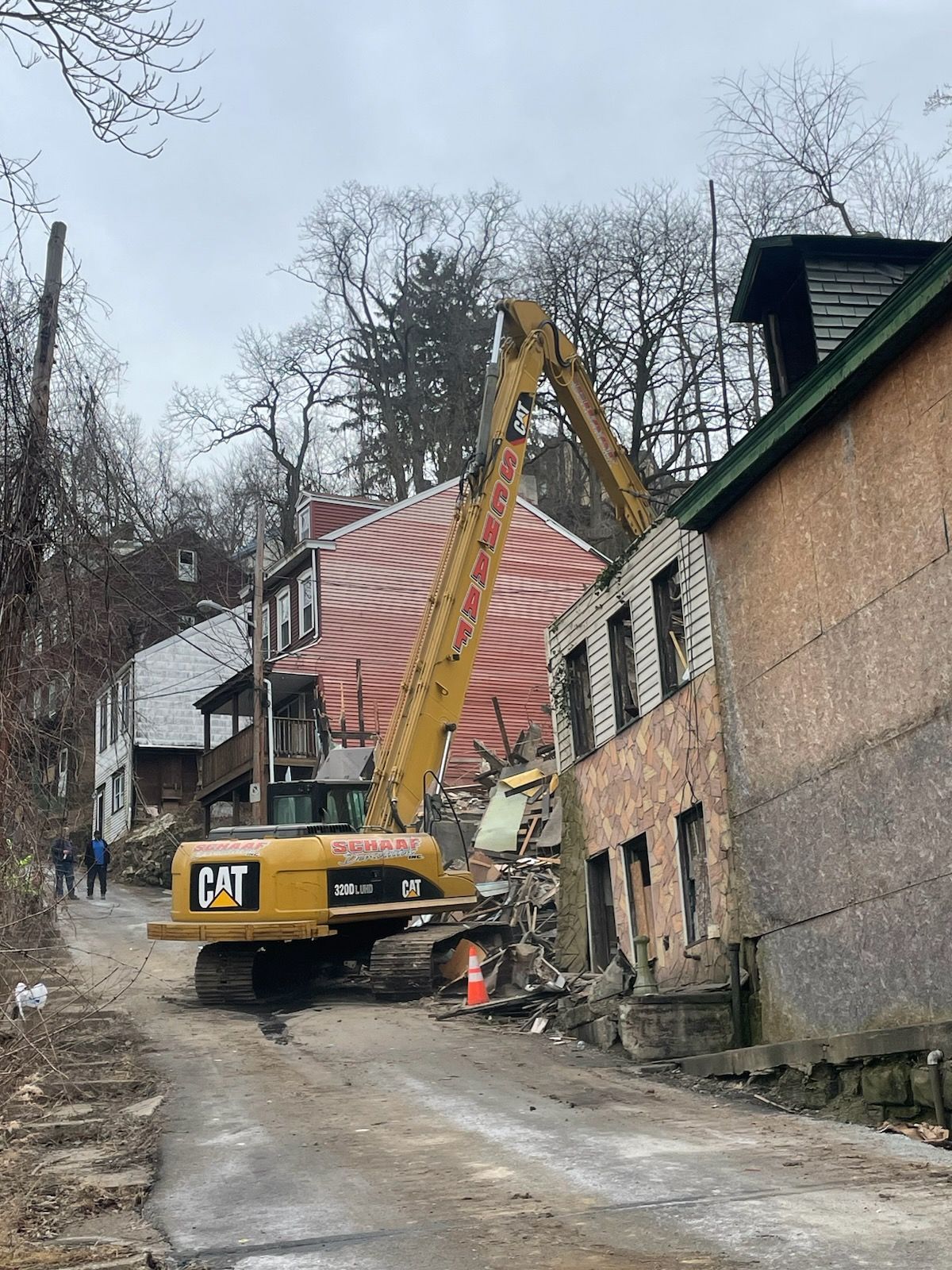
Tight lot demolition in Pittsburgh requires more planning than removing a structure on an open property. Many residential and commercial properties throughout the Pittsburgh region sit close to neighboring homes, businesses, retaining walls, sidewalks, or utility lines. Narrow streets and limited access can make it difficult to move equipment, stage debris, and safely complete the project. These conditions affect nearly every phase of demolition, from selecting the right equipment to planning debris removal and protecting nearby structures. A contractor with experience in Pittsburgh's older neighborhoods can identify potential challenges early and develop a plan to keep the project organized and safe. Why Tight-Lot Demolition Is Different Every demolition project is unique, but limited-access properties require additional planning before work begins. On a confined site, there is little room for heavy equipment to maneuver, and surrounding homes, garages, driveways, landscaping, and retaining walls often need to remain untouched. Contractors must determine how to remove the structure safely while protecting nearby property and maintaining safe working conditions. Material removal is also more complicated. Instead of staging debris in one large area, crews often have to remove and haul materials away in smaller loads. Dust, vibration, and falling debris must also be carefully managed when neighboring buildings are only a short distance away. For these reasons, demolition on narrow lots should never be approached as a simple teardown. It is a carefully planned construction project that depends on experience, communication, and attention to detail. If you are still in the early planning stage, Schaaf Excavating Contractors also recommends reviewing the basics of how to get started with demolition before planning a tight-lot project. Common Challenges on Pittsburgh Properties Many of Pittsburgh's neighborhoods were developed long before modern construction equipment existed. As a result, contractors frequently encounter properties with limited access and challenging site conditions. Common obstacles include: Narrow residential lots Older homes built close together Hillside properties with steep grades Retaining walls near the structure Shared driveways or alley access Overhead utility lines Limited space for trucks and dumpsters Fencing or landscaping that restricts equipment access Understanding these conditions before commercial or residential demolition begins helps Pittsburgh contractors develop a realistic project plan and avoid unnecessary delays. Evaluating Site Access One of the first steps in any demolition project is determining how crews, equipment, and hauling trucks will access the property. During the site evaluation, contractors consider questions such as: Can heavy equipment safely reach the building? Is there enough room for equipment to operate? Where can debris containers be placed? Will trucks have enough space to enter and leave the property? Will portions of the structure need to be removed by hand? How will debris be transported off the site? The answers influence equipment selection, labor requirements, project timelines, and overall cost. An experienced commercial demolition contractor in Pittsburgh evaluates each property individually rather than relying on assumptions. In Pittsburgh, where terrain and neighborhood layouts vary significantly, this early planning plays a major role in keeping the project efficient. Protecting Neighboring Property Many demolition projects take place only a few feet from neighboring homes or businesses. Garages, sidewalks, fences, patios, retaining walls, and landscaping often need to remain intact throughout the project. Before demolition begins, contractors should identify nearby structures and determine how each phase of the project could affect them. Rather than removing the building all at once, experienced crews often follow a controlled demolition sequence that allows materials to be removed in a deliberate order. Depending on the property, additional protective measures may also be used to help shield neighboring structures and maintain safe work zones. Clear communication with adjacent property owners can further reduce disruptions during the project. Utility Coordination and Safety Planning Utility planning is another essential part of demolition, especially on older properties. Before work begins, contractors should identify and coordinate the disconnection of gas, electric, water, sewer, and communication lines. Older neighborhoods may contain both overhead and underground utilities that affect equipment placement and demolition activities. A comprehensive safety plan should also address: Equipment operating areas Debris removal routes Worker safety procedures Protection for neighboring properties Pedestrian safety Evaluating these conditions before demolition begins helps reduce avoidable complications and creates a more organized job site. Choosing the Right Demolition Method The best demolition method depends on the property's size, available access, surrounding structures, and site plans. Mechanical Demolition Mechanical demolition is often the most efficient option when heavy equipment has enough room to operate safely. Excavators and other specialized equipment allow crews to remove structures while maintaining control throughout the process. Selective Demolition When only part of the structure needs to be removed, or neighboring buildings are very close, selective demolition provides greater precision. Crews carefully dismantle specific sections while protecting the remaining structure and surrounding property. Hand Demolition Some confined areas cannot be reached with machinery. In these situations, hand demolition allows crews to safely remove materials around utilities, tight spaces, or other sensitive areas. Partial or Interior Demolition Not every project involves tearing down an entire building. Interior demolition and partial demolition allow contractors to remove damaged or outdated sections while preserving the portions of the structure that will remain. The right approach depends on the site's specific conditions and should always be determined after a thorough evaluation. Dust, Debris, and Noise Control Demolition naturally creates dust, debris, and noise, but careful planning can reduce the impact on neighboring homes, businesses, and public spaces. Dust control measures help limit airborne particles, especially when structures are close together. Keeping the work area organized also helps prevent debris from spreading beyond the demolition zone. Although demolition cannot be completely quiet, scheduling work efficiently and maintaining an orderly job site can reduce unnecessary disruption. Contractors should also plan equipment movement and debris hauling to help keep nearby sidewalks, driveways, and roadways as safe and accessible as possible throughout the project. These details not only improve safety but also demonstrate consideration for surrounding property owners. Debris Removal on Limited-Access Sites Removing the structure is only one part of the project. On tight lots, debris removal often requires just as much planning as the demolition itself. Unlike open properties where dumpsters can be placed next to the building, confined sites frequently require debris to be moved in stages before it can be loaded onto trucks. Narrow streets, limited parking, and restricted work areas can all affect how materials are transported off-site. Depending on the property's layout, contractors may use smaller equipment to move debris to a staging area where it can be safely loaded and hauled away. Cleanup also requires careful coordination to ensure materials are removed without damaging neighboring property or creating safety hazards. Planning debris removal before demolition begins helps reduce delays and keeps the demolition project organized from start to finish. Permits and Local Requirements Most demolition projects require permits before work can begin. Requirements vary depending on the municipality, the type of structure being removed, and the scope of the project. Property owners should understand who will be responsible for obtaining permits and coordinating any required documentation. Utility disconnection verification and additional approvals may also be necessary before demolition can proceed. Projects located near sidewalks, streets, or other public areas may require additional planning to maintain safety throughout the project. Working with a contractor familiar with local municipalities can simplify this process and help ensure the project meets applicable requirements before demolition begins. You can learn more about permit information on the City of Pittsburgh Department of Permits, Licenses, and Inspections website . How Tight Lots Can Affect Demolition Costs Many property owners wonder whether demolition on a tight lot costs more than demolition on an open site. The answer depends on the property's specific conditions. Limited-access projects often require additional planning, labor, and specialized equipment, which can increase overall costs. Factors that commonly affect pricing include: Limited access to equipment and hauling trucks Additional hand labor Smaller or specialized machinery More detailed demolition sequencing Protection of neighboring structures Complex debris removal Utility coordination Permit requirements Hillsides, retaining walls, or other challenging site conditions Because every property is different, an on-site evaluation provides the most accurate estimate. Visiting the site allows a contractor to identify potential challenges and develop a demolition plan based on the property's actual conditions rather than general pricing averages. Why Local Experience Matters Pittsburgh presents demolition challenges that are not common in many other parts of the country. Older neighborhoods, steep terrain, narrow streets, and aging infrastructure all influence how a demolition project should be planned. An experienced local contractor understands how these conditions affect equipment access, debris removal, and overall project logistics. This knowledge can help prevent delays and improve safety throughout the demolition process. Local experience is especially valuable when demolition is only the first step in a larger project. After the structure has been removed, the site may require excavation, grading, drainage improvements, foundation removal, or preparation for new construction. Working with a contractor that provides both demolition and excavation services creates a smoother transition between phases and helps keep the project moving efficiently. Tight-Lot Demolition Requires Careful Planning Demolishing a building on a tight lot requires more than simply tearing it down. Limited access, nearby buildings, utility coordination, debris removal, and site safety all require careful planning before work begins. An experienced demolition contractor can evaluate the property, identify potential challenges, and develop a plan that protects surrounding structures while keeping the project organized and efficient. Whether you are removing an older home, garage, commercial building, or another structure in the Pittsburgh area, choosing a contractor experienced with confined sites can make a major difference in the project's success. Schaaf Excavating Contractors is your top demolition company in the Pittsburgh area. Our team evaluates each property individually to develop a safe, practical demolition plan based on the site's unique conditions. Contact us today to request an estimate and learn how we can prepare your property for its next phase. Frequently Asked Questions Can a building be demolished if access is limited? Yes. Limited access does not prevent demolition, but it often requires adjustments to the demolition plan, equipment selection, labor, and debris removal process. Every property should be evaluated individually before work begins. Does tight-lot demolition cost more? It can. Additional labor, specialized equipment, more detailed planning, protection of nearby structures, and more complex debris removal may increase the overall cost. An on-site evaluation is the best way to determine project pricing. How do contractors protect nearby buildings during demolition? Experienced contractors use controlled demolition methods, careful sequencing, site-specific planning, and protective measures to help reduce the risk of damage to the neighboring structures and property. Do I need a permit to demolish a building in Pittsburgh? Permit requirements will vary depending on the municipality and the type of structure being demolished. Property owners should verify local requirements or work with a contractor who is familiar with the permitting process. What should I look for when hiring a demolition contractor for a tight lot? Choose a contractor with experience completing limited-access demolition projects. Ask about equipment selection, site access planning, debris removal, utility coordination, protection of nearby structures, permitting, and whether excavation or grading services are available after demolition.
By Timothy Schaaf • June 19, 2026
Demystifying Your Decision For Demolition's Next Steps
Show More
phone icon

We are excited to hear about your project. Give us a call!


(412) 670-1980