Commercial Demolition In An Urban Environment
If you’ve ever watched a commercial building come down in downtown Pittsburgh, you know it looks nothing like a suburban teardown. There’s no open field, no quiet perimeter, and no room for error. Urban commercial demolition in Pittsburgh is a controlled, highly coordinated operation that happens in the middle of live traffic, active businesses, and constant pedestrian movement.
This article walks through a real-world commercial building demolition project performed by Schaaf Excavating Contractors, a Pittsburgh demolition contractor specializing in complex urban environments. It’s a real to life story of one job site, from the first site walk to the final sweep, showing how traffic control, safety planning, and logistics actually work when you’re demolishing a commercial structure in a dense city environment.
The Job Site and the Constraints
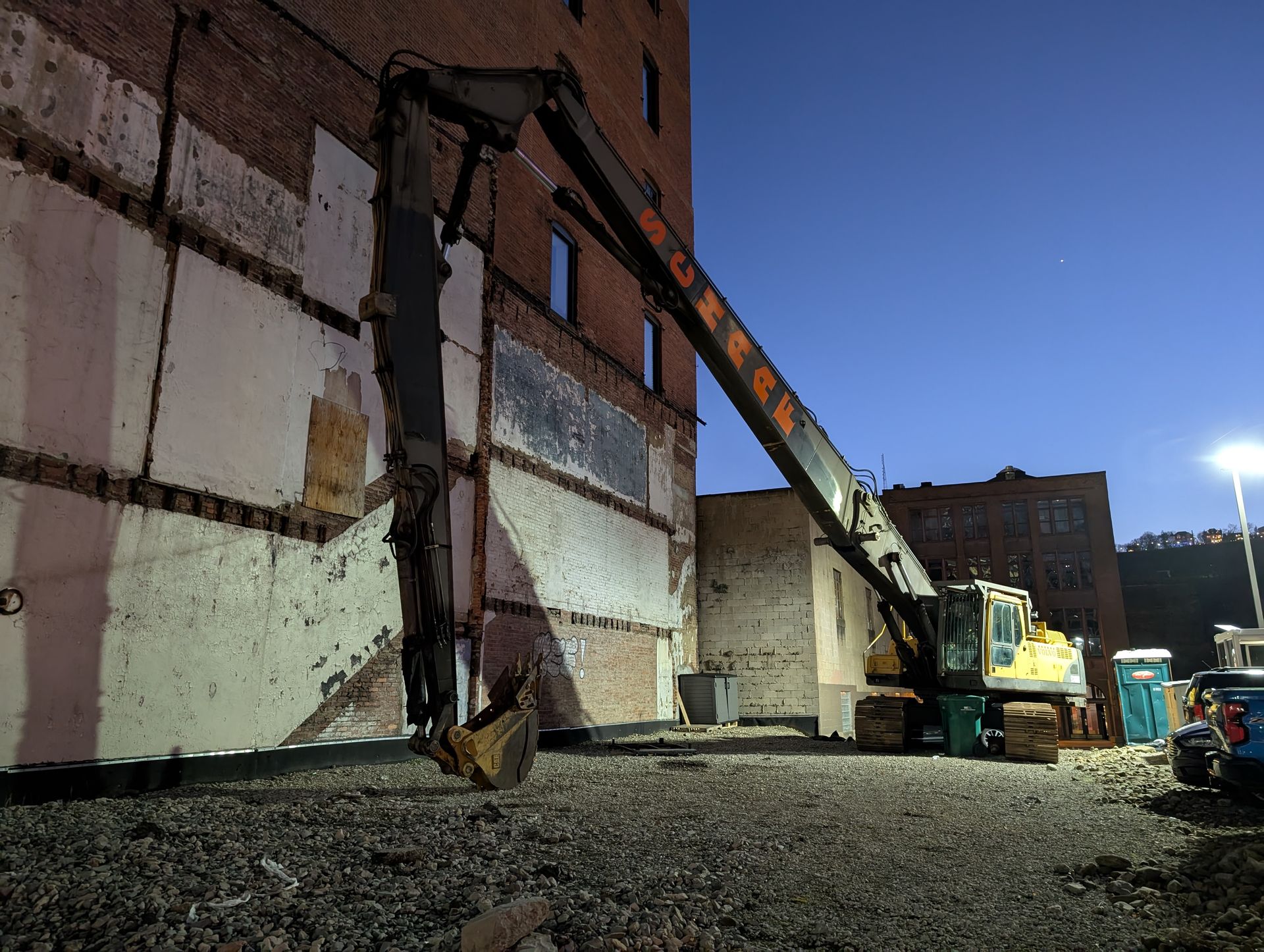
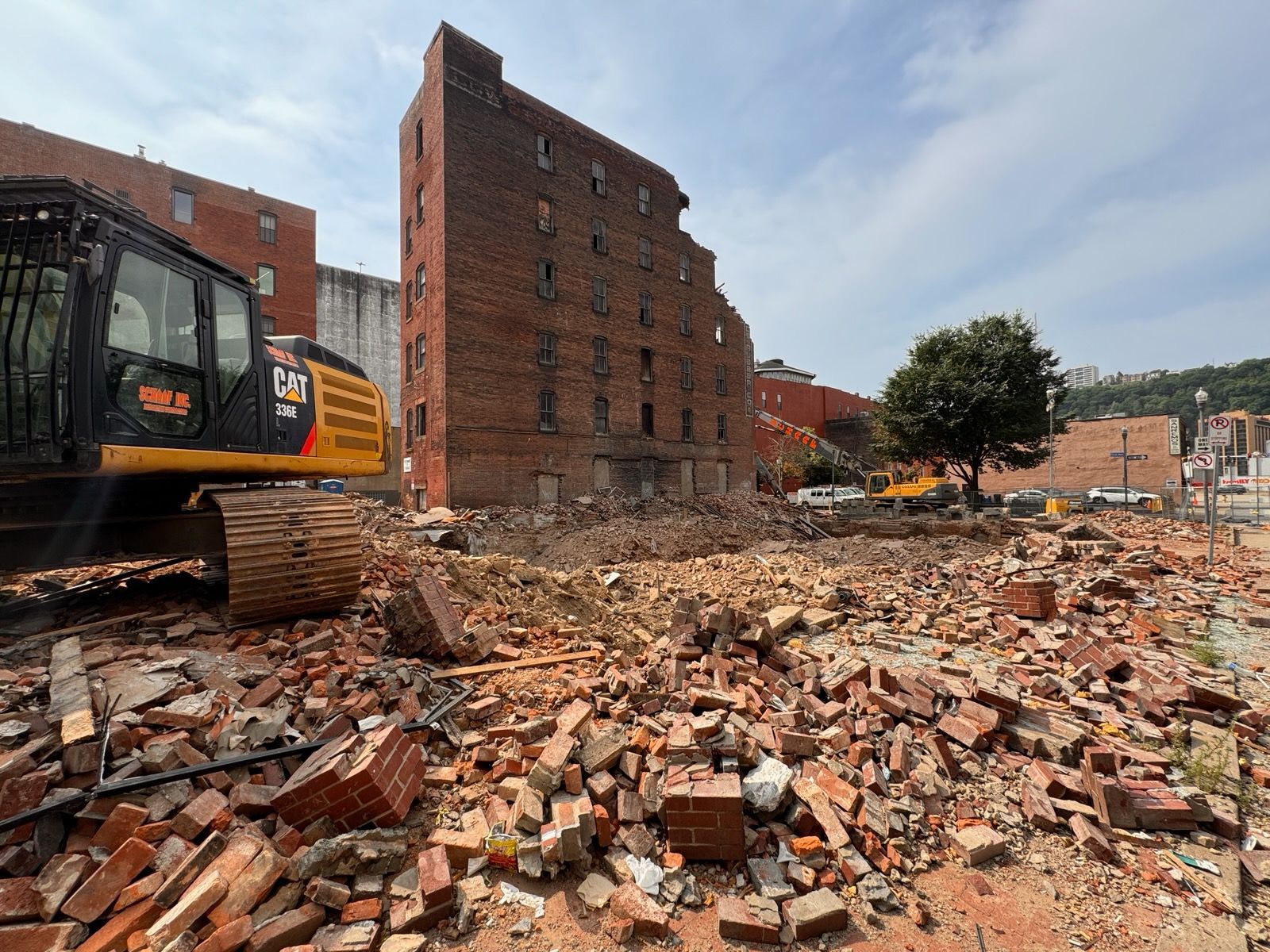
The building sat along a narrow corridor just outside downtown Pittsburgh. Four stories tall, brick and steel construction, built decades before modern documentation standards. One side faced a two-lane city street with bus traffic. The other side shared a property line with an occupied commercial building. A sidewalk ran directly along the façade, carrying steady foot traffic from nearby offices and parking garages.
There was no laydown yard. No empty lot. No buffer zone. Every piece of equipment, every truck, and every worker had to fit into a footprint that barely extended beyond the building itself.
This is the reality of commercial building demolition in Pittsburgh’s urban core. For Schaaf Excavating Contractors, projects like this are defined as much by surrounding conditions as by the structure itself.
Pre-Demolition Planning Before Any Equipment Arrives
Long before a machine showed up, the project lived on paper.
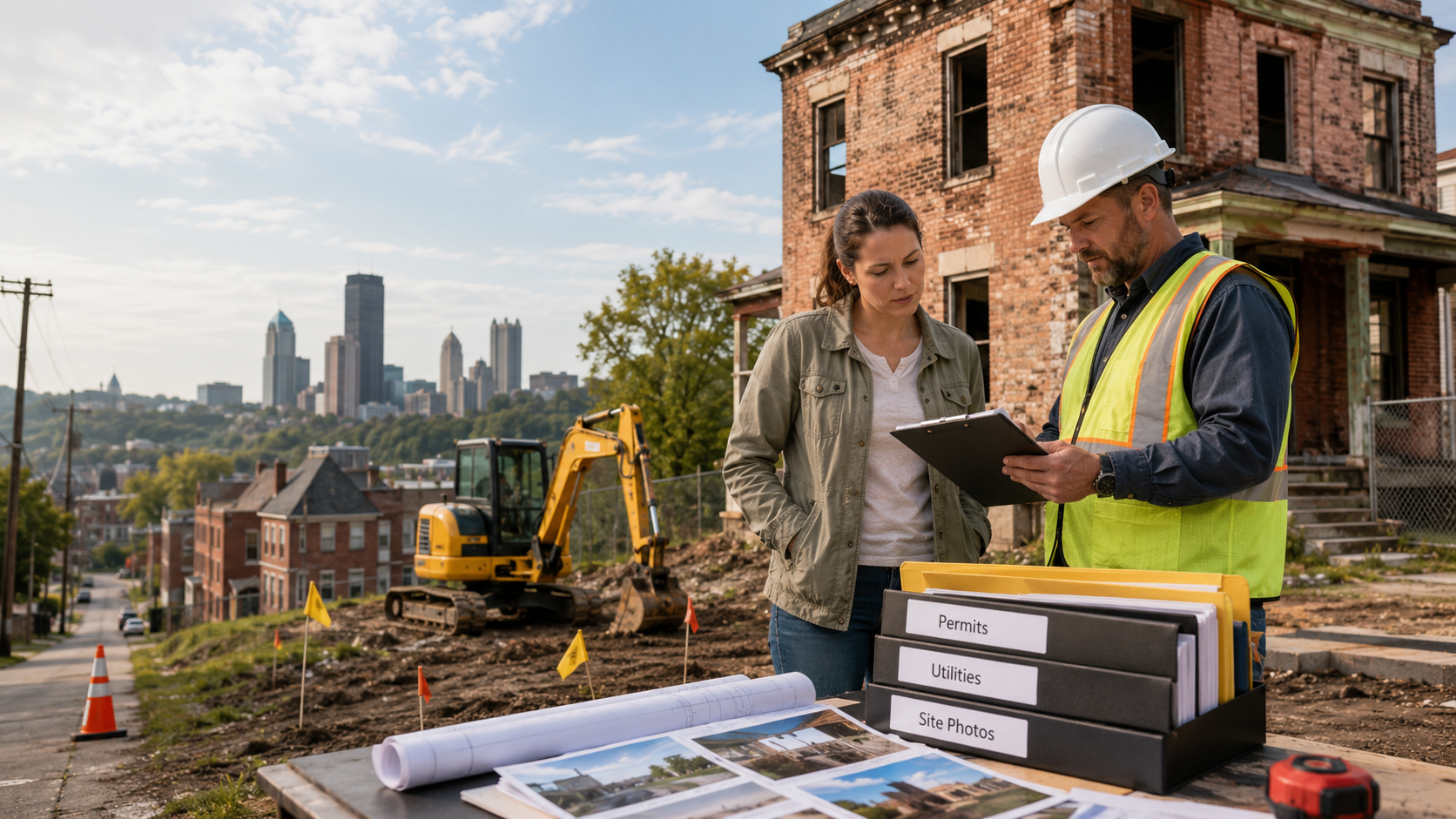
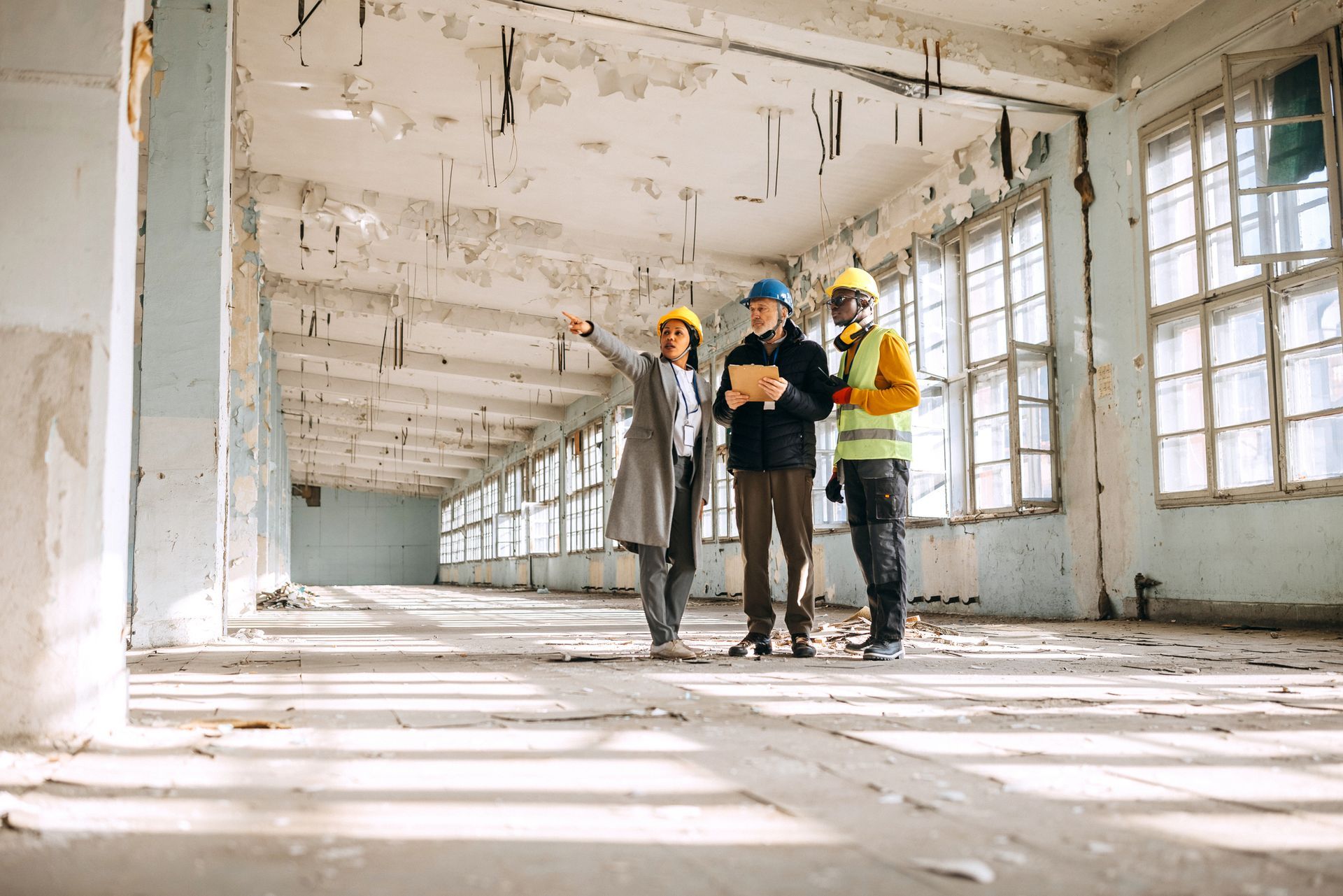
The Schaaf team began with a detailed site evaluation, walking the perimeter multiple times at different times of day. Morning pedestrian patterns looked different than lunchtime. Traffic congestion shifted once the buses started running more frequently. These observations shaped access planning, work windows, and shutdown procedures.
Permitting requires coordination with the City of Pittsburgh, public works, and utility providers. Truck routes were mapped to avoid weight-restricted bridges, and hauling was scheduled during off-peak hours. Logistics plans accounted for where trucks could line up without blocking intersections.
Urban commercial demolition does not allow for improvisation. Every move has to be planned before the first permit is issued.
Managing Traffic on a Live City Street
Once demolition began, traffic control became a daily operation, not a one-time setup.
Schaaf Excavating Contractors implemented rolling lane closures rather than full shutdowns, keeping at least one lane open whenever possible. Flaggers were positioned at both ends of the block, communicating by radio to manage truck entry and exit. Haul trucks were scheduled in tight windows to avoid rush hour and major downtown events.
Public transit coordination was critical. Bus schedules dictated when heavier debris could be loaded out. On days when buses could not be rerouted, demolition paused during peak transit times.
This level of demolition traffic control is standard practice for experienced urban contractors and essential for keeping downtown Pittsburgh moving safely.
Protecting Pedestrians and Nearby Businesses
Pedestrian safety was non-negotiable.
Before any exterior demolition began, sidewalk scaffolding with overhead protection was installed. Debris netting wrapped the structure, and clear signage redirected foot traffic well before pedestrians reached the work zone.
Dust control was handled with continuous misting, not reactive spraying. Work paused when wind conditions changed. If a neighboring business needed uninterrupted access for deliveries or customers, sequencing was adjusted to accommodate those needs.
Urban demolition is not just about removing a building. It is about protecting the people who pass by it every day.
Choosing Equipment for Precision in Tight Spaces
This project was not about size. It was about control.
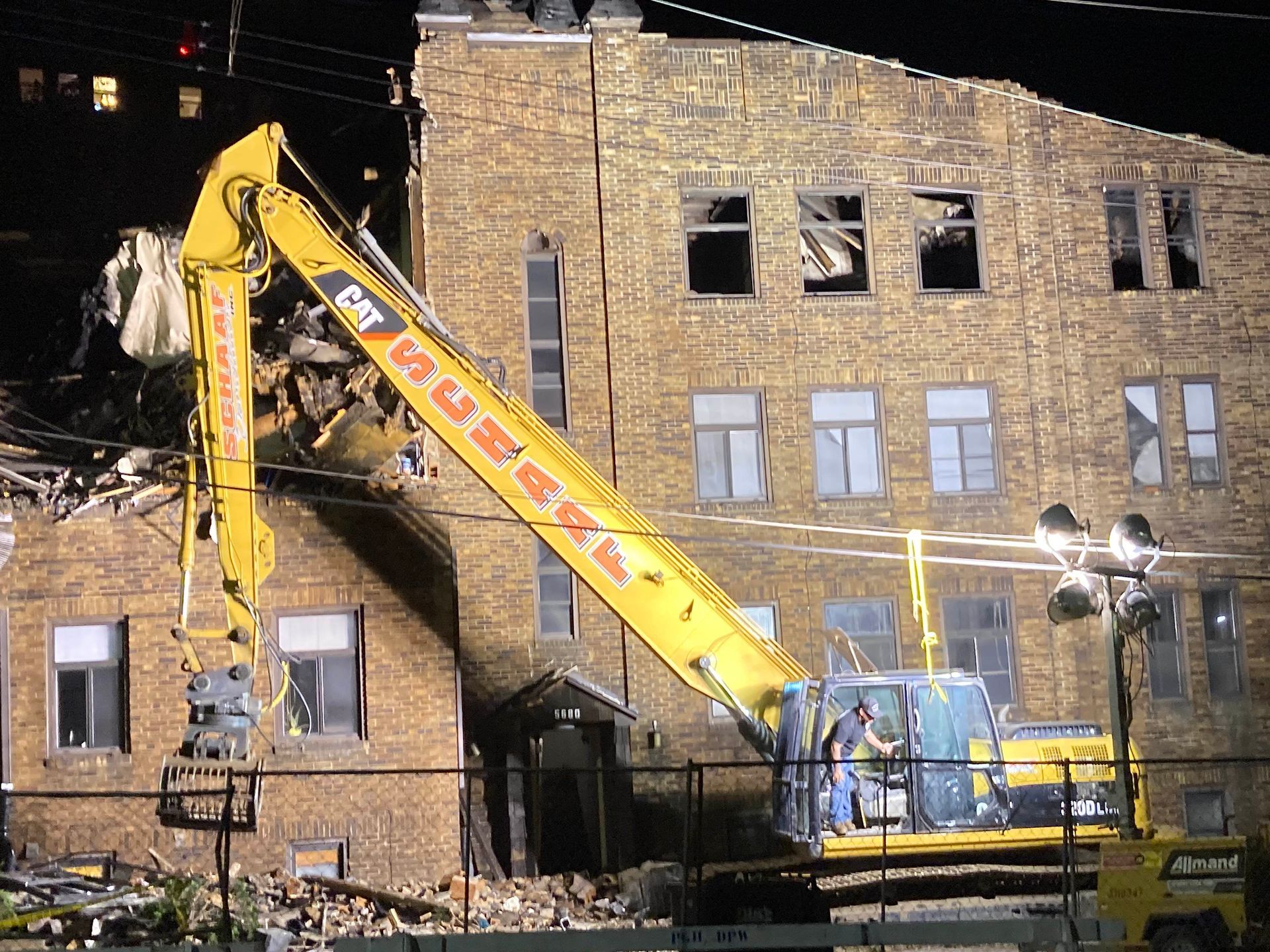
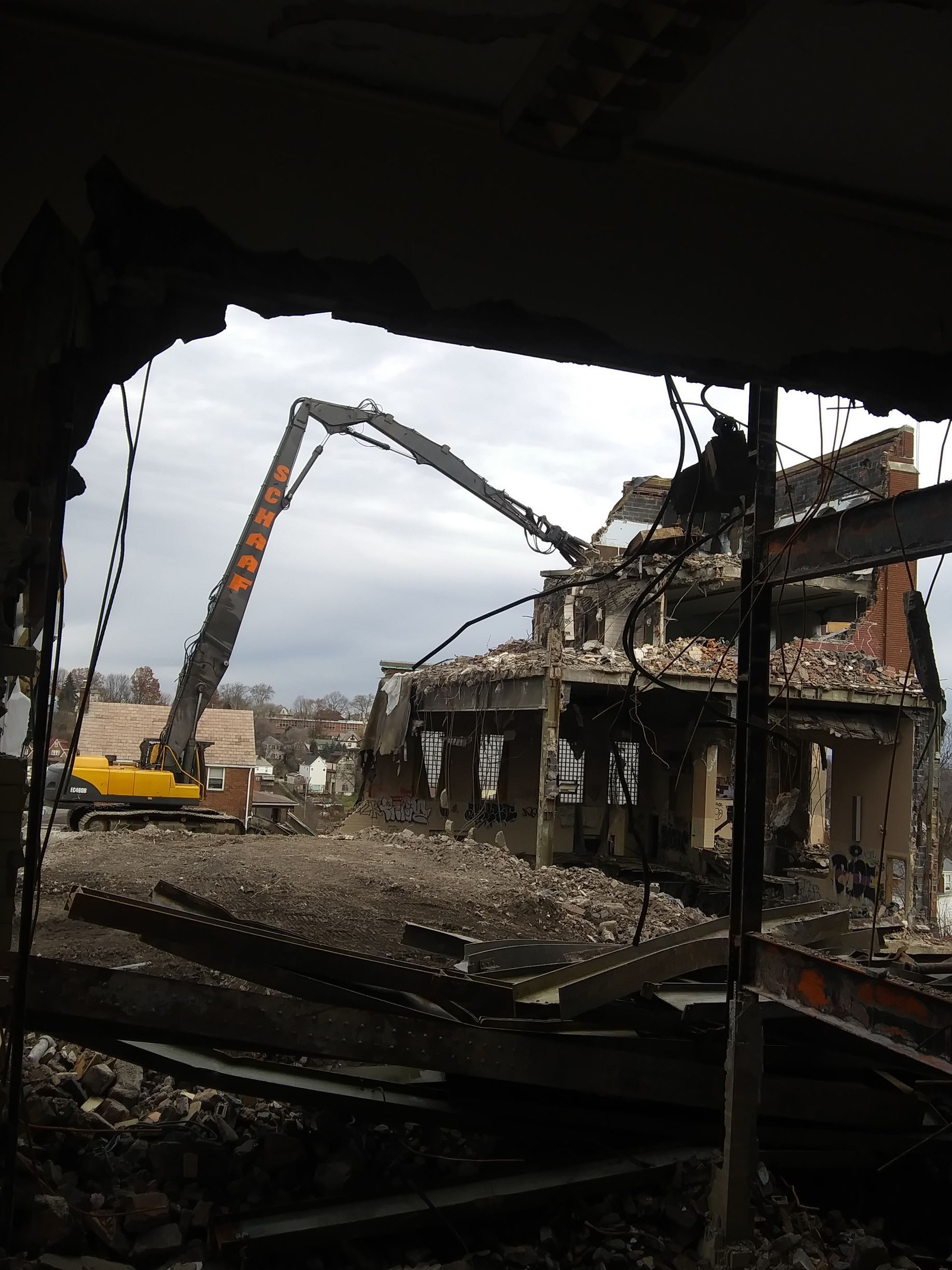
Schaaf selected compact excavators with high-reach capabilities instead of larger machines that would have limited maneuverability. Attachments included concrete processors and shears rather than breakers to reduce vibration, noise, and dust.
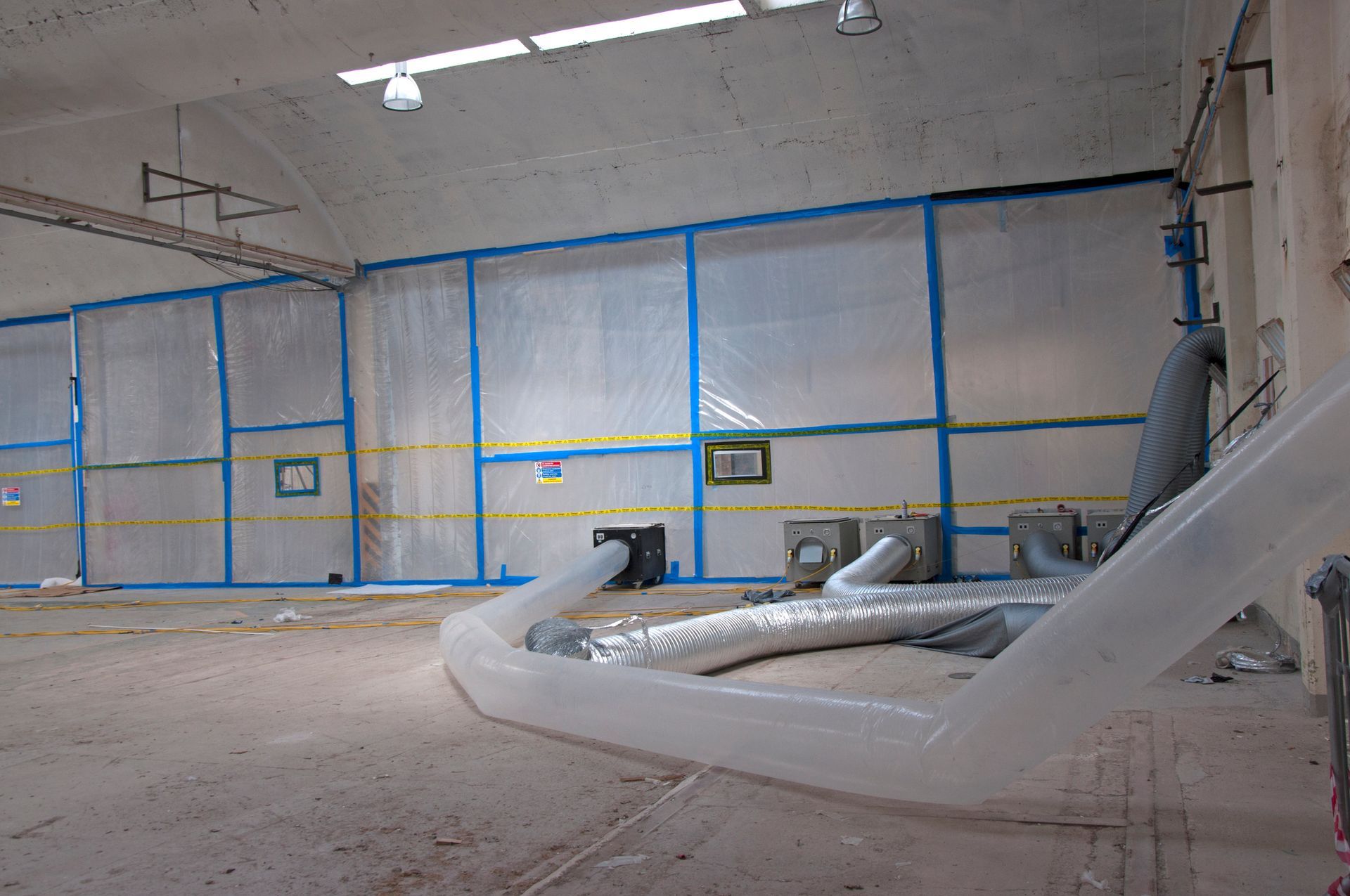
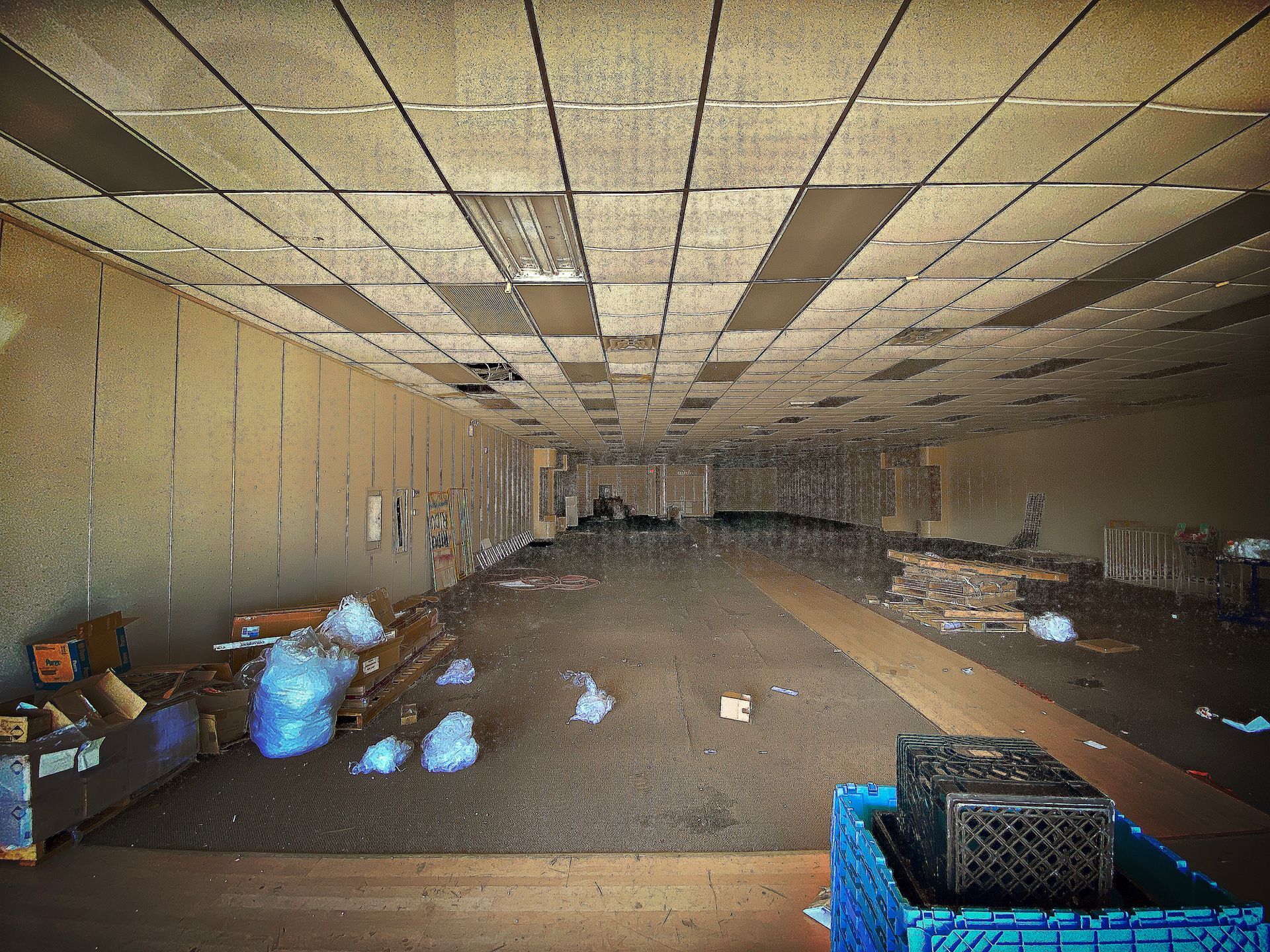
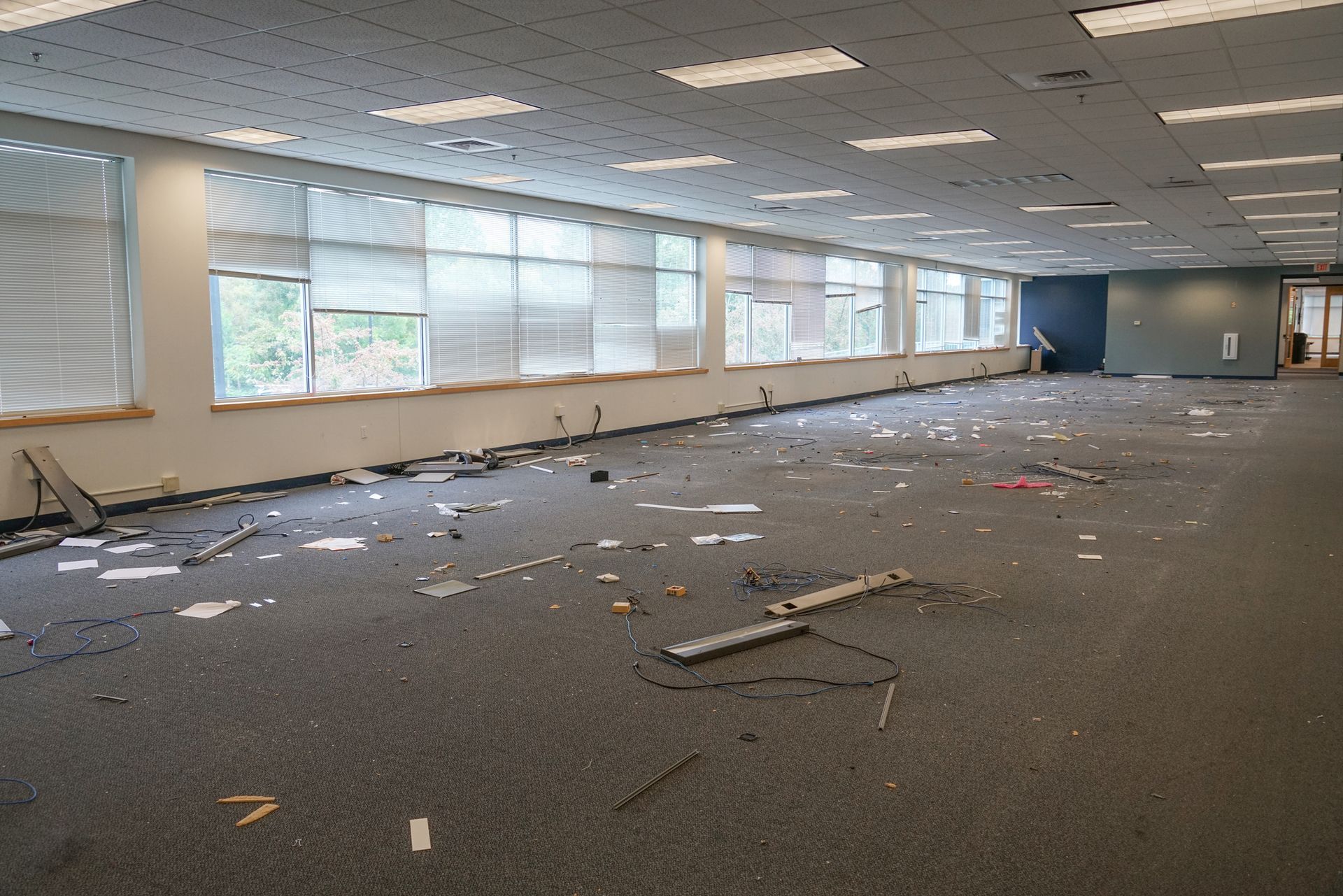
Interior demolition was prioritized to reduce structural loads methodically. Floors were stripped, beams exposed, and materials removed before exterior walls were addressed. Every machine movement was deliberate and planned.
In urban commercial demolition, precision replaces brute force.
When the Plans Meet Reality on Site
No matter how detailed the planning, reality always shows up.
Midway through demolition, the crew encountered undocumented utilities embedded in a structural wall, lines that did not appear on any drawings. Work stopped immediately. Utilities were traced, verified, and safely disconnected before demolition resumed.
Later in the project, a week of heavy rain increased debris weights and slowed hauling. Truck loads were adjusted, and sequencing changed to maintain street safety and prevent debris tracking into traffic lanes.
These moments highlight why experience matters. Schaaf Excavating Contractors’ ability to pause, reassess, and adapt kept the project moving without safety incidents or city shutdowns.
Sequenced Demolition and Material Removal
With no room to stockpile debris, everything moved out just in time.
Demolition progressed floor by floor, with materials separated as they came down. Steel was sorted for recycling. Concrete was processed and loaded immediately. Debris never sat onsite longer than necessary.
Hauling schedules were synchronized with demolition progress. Trucks arrived when loads were ready, not before and not after. This minimized congestion and reduced the project’s impact on surrounding streets.
In downtown Pittsburgh demolition, logistics are as critical as demolition itself.
Coordinating With the City and the Surrounding Community
City inspectors visited the site regularly, and open communication helped prevent delays. Inspections were scheduled in advance, documentation was prepared, and any required adjustments were discussed early.
Schaaf Excavating Contractors also maintained direct communication with neighboring businesses. Weekly updates explained upcoming work phases, potential noise, and traffic changes. That transparency helped prevent complaints and maintained positive relationships throughout the project.
Urban demolition succeeds through coordination, not isolation.
Why Experience Matters in Urban Commercial Demolition
This project could have gone very differently with an inexperienced contractor.
Without proper traffic planning, lane closures could have caused gridlock. Without pedestrian protection, the site could have been shut down. Without disciplined sequencing and logistics, debris could have overwhelmed the street.
Choosing a Pittsburgh demolition contractor with proven urban experience, like Schaaf Excavating Contractors, is not just a preference. It is risk management. Property owners and developers can learn more about evaluating demolition teams here:
Finding & Choosing the Right Commercial Demolition Contractor
https://www.pittsburghdemolitionandwrecking.com/finding-choosing-the-right-commercial-demolition-contractor
How This Project Fits Into the Demolition Process
This project followed the same core stages as any commercial demolition, but with added layers of planning and control.
Pre-demolition planning, permitting, and safety setup came first. Structural demolition followed a controlled sequence. Material removal and site coordination ran parallel throughout the job. Final inspections and site restoration closed the project.
Traffic control, logistics, and pedestrian safety are not side tasks in urban demolition. They are embedded into every stage of the process. A full overview of those stages is available at
https://www.pittsburghdemolitionandwrecking.com/what-are-the-stages-of-a-demolition-project
Closing the Project and Leaving the Site Ready
As the final wall came down, the focus shifted from demolition to restoration.
Streets were cleaned daily, but the final sweep restored the block completely. Sidewalk protection was removed. Lanes reopened. Utility stubs were secured. The site was graded and left ready for the next phase of redevelopment.
From the outside, it looked simple. The building was gone. But behind that outcome was months of planning, coordination, and disciplined execution by Schaaf Excavating Contractors.
That is what urban commercial demolition in Pittsburgh really looks like. Controlled, deliberate, and designed to work within the city, not against

Author: Tim Schaaf
Owner & Founder of Schaaf Excavating Contractors.