Demolishing Fire-Damaged Apartments In Squirrel Hill
Schaaf Discusses Demolition After Fire Damage
When a building has been heavily damaged by fire, demolition is sometimes the safest and most responsible next step. Severe heat, partial collapse, and water used during suppression can leave a structure unstable in ways that are not obvious from the street. In those situations, delaying action can increase risk for property owners, neighbors, first responders, and the public.
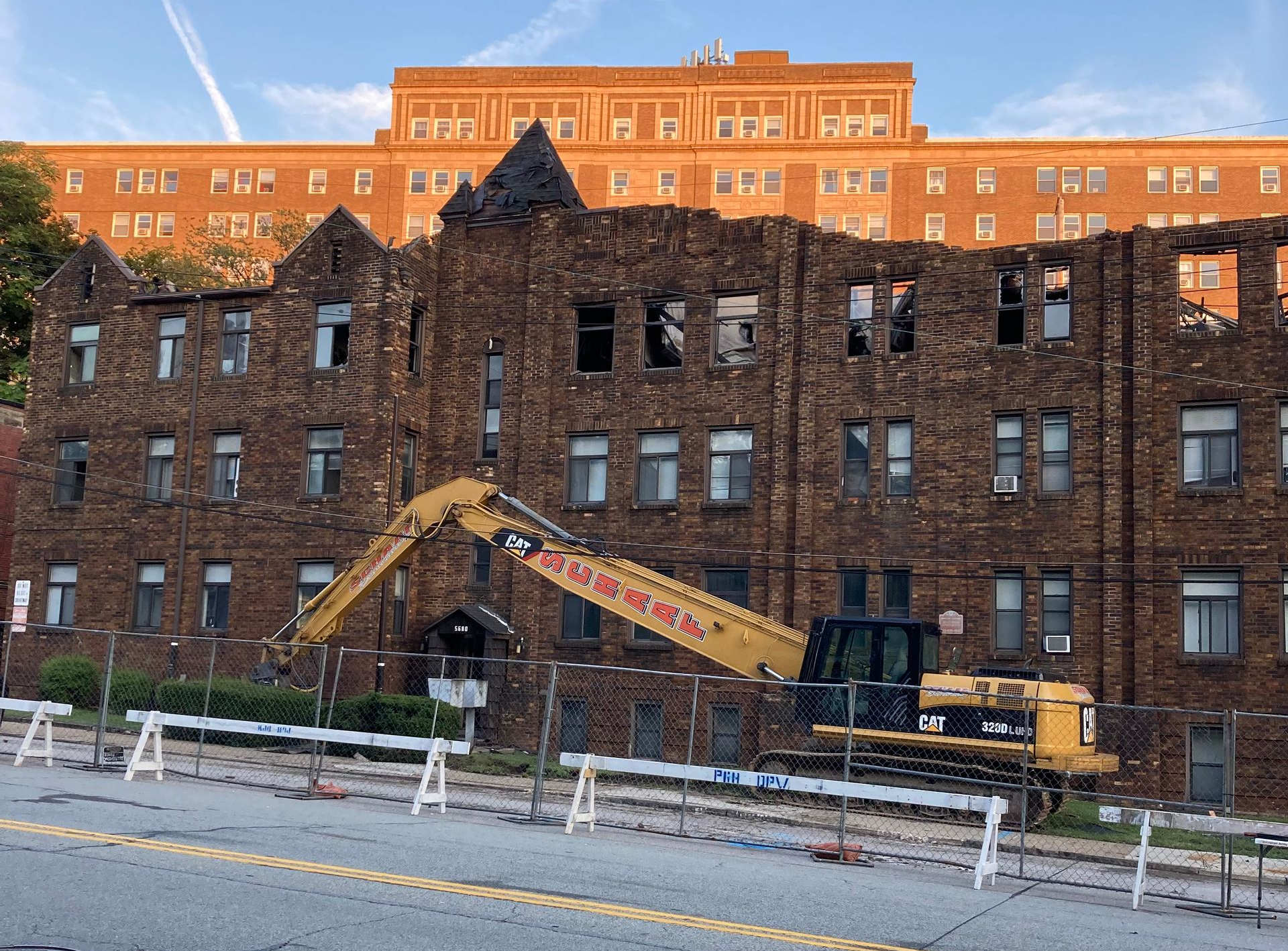
Schaaf Excavating Contractors has extensive experience handling difficult full structure demolition, including fire-damaged structures. That experience was on display in Pittsburgh’s Squirrel Hill neighborhood after the September 2025 fire at the Jefferson Apartments, a nearly century-old, 50-unit building on Forward Avenue. Local reporting and official city statements indicate the structure sustained major fire damage, with portions of the roof and facade collapsing, and that the City of Pittsburgh moved quickly to coordinate demolition and public safety measures.
Losing a home to fire is deeply disruptive. Residents are forced out of familiar routines, property owners face immediate safety and insurance issues, and municipalities must address hazards that can affect an entire block. In moments like that, demolition contractors need to bring more than equipment. They need a calm, organized process that protects the site, works with public officials, and makes a difficult situation more manageable. That is the standard Schaaf Excavating Contractors aims to meet on every fire-damaged demolition project.
Why Fire-Damaged Structures Cannot Be Left Standing
A building that survives a fire is not necessarily safe to enter, occupy, or leave in place. Fire changes how materials perform, and those changes are not always visible.
Structural instability
Extreme heat can weaken steel, char or consume load-bearing lumber, and damage the connections that hold a building together. Even if exterior walls remain standing, the interior structure may no longer be able to support them. Roof systems and floor assemblies are especially vulnerable after prolonged burning or collapse.
Progressive collapse risk
One of the biggest dangers in a fire-damaged structure is delayed failure. A wall may appear stable until adjacent supports shift. A roof section may hold temporarily, only to fail days later. Floors can separate from walls or sag under the weight of burned debris and suppression water. This is why heavily damaged buildings often require restricted access, fencing, and controlled demolition rather than piecemeal cleanup.
Water damage from fire suppression
The water used to extinguish a major fire can create another layer of structural stress. Saturated materials become heavier. Wood framing can swell, weaken, or rot. Masonry and foundations may be compromised by heat followed by rapid cooling and saturation. In large apartment buildings, that combination can affect multiple floors and interconnected structural systems at once.
Public safety and liability
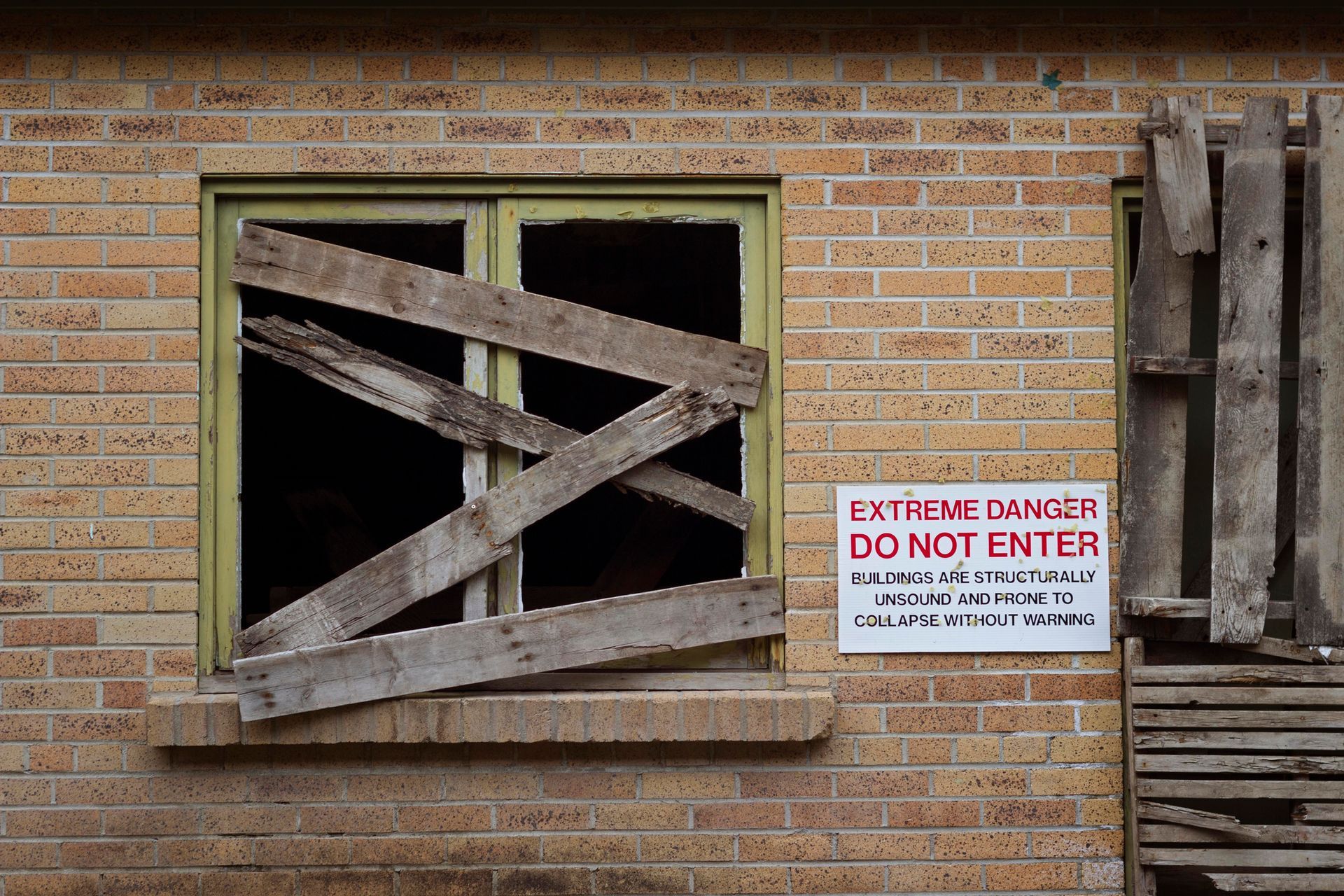
Leaving a badly damaged building standing exposes owners and municipalities to ongoing risk. Falling bricks, loose facade materials, unstable parapets, and interior collapse zones can threaten pedestrians, neighboring properties, and anyone who enters without authorization. From an insurance and liability standpoint, inaction is often the most dangerous option.
Learn more about why structure need to be demolished with Schaafs demolition experts~
Hazards Professionals Encounter in Fire-Damaged Demolition
Fire-damaged demolition is not routine demolition. Contractors have to assume conditions may change quickly and that hazards can exist in plain sight or remain hidden until work begins.
Structural hazards
On these projects, crews may encounter unstable masonry walls, partially collapsed floor systems, unsupported facades, weakened roof framing, and debris loads that have shifted since the fire. A building may look intact from one side while the interior is severely compromised.
Environmental hazards
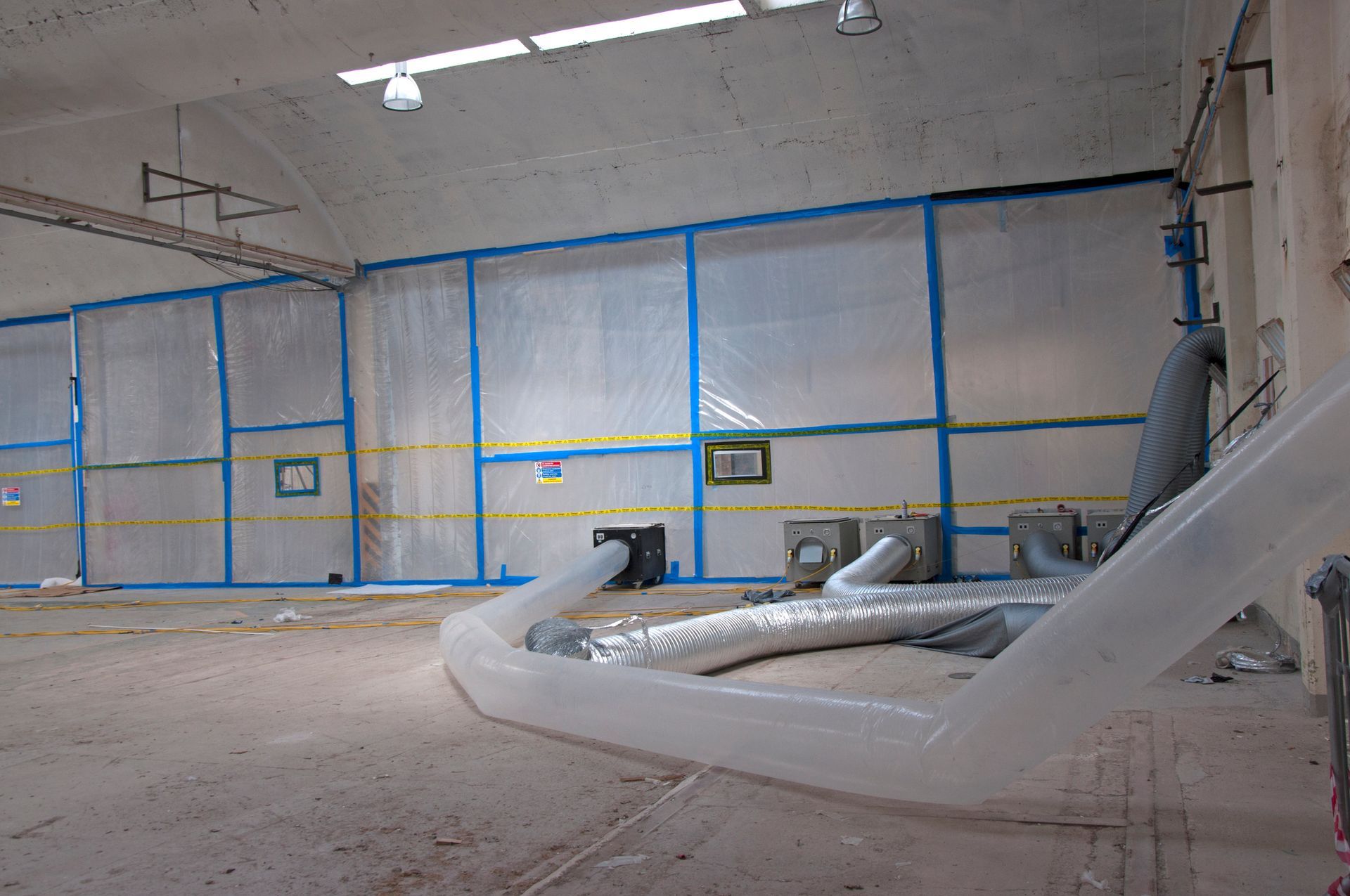
Demolition crews also have to manage dust and airborne particulates, along with the possibility of asbestos-containing materials or lead-based coatings in older structures. Smoke damage, burned debris, and fire suppression residue can contaminate materials that must be handled and disposed of carefully. These risks are common concerns on similar projects and must be addressed through inspection, containment, and proper demolition planning.
Utility hazards
Gas, electric, water, sewer, and underground utility lines must be identified, disconnected, and verified before demolition begins. In an emergency response setting, that coordination is critical. Damaged electrical systems, hidden service connections, and underground infrastructure can all pose serious safety risks if not accounted for early.
Site conditions in urban neighborhoods
Large fire-damaged apartment buildings in city settings create another layer of complexity. Contractors may be working beside occupied buildings, narrow streets, sidewalks, utility corridors, and active traffic. That requires fencing, exclusion zones, dust control, lighting, hauling logistics, and coordination with police, fire officials, and municipal departments.
How Large-Scale Apartment Buildings Are Demolished Safely
When people hear that a large building is being demolished, they sometimes picture an implosion. That is not how most fire-damaged apartment buildings come down. The standard approach is controlled mechanical demolition.
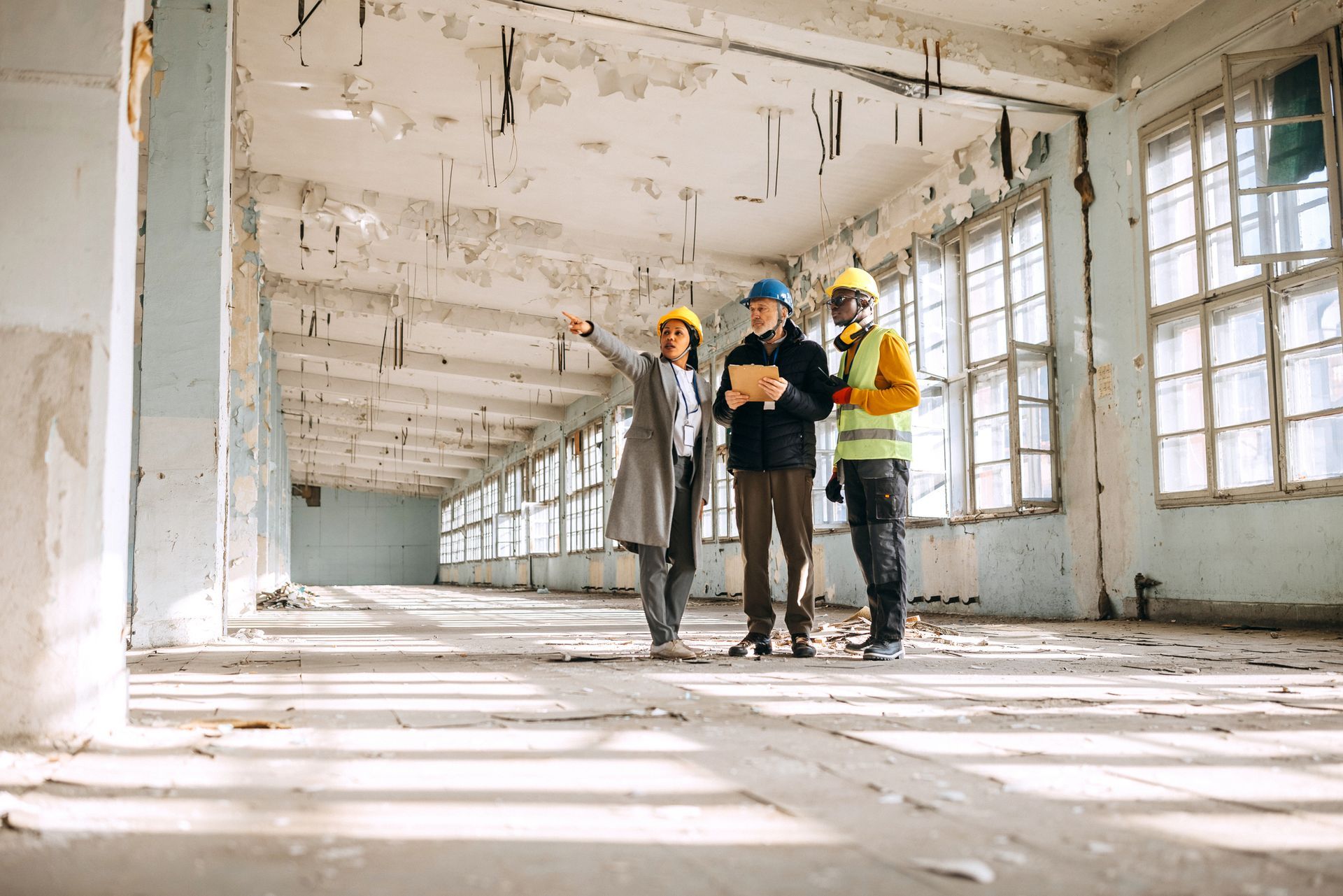
Pre-demolition planning
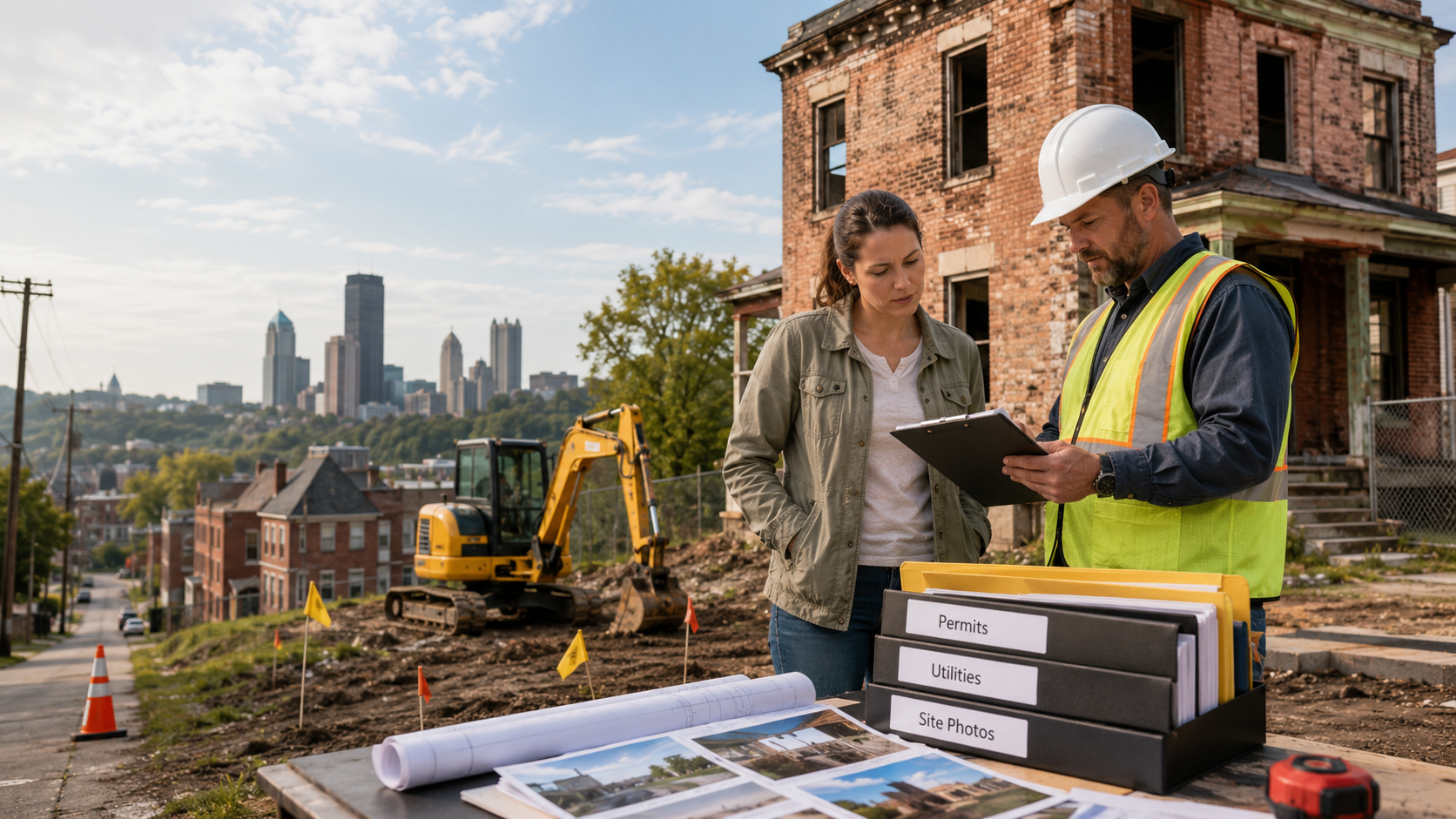
Before equipment starts tearing into a structure, experienced contractors typically coordinate several critical steps:
- Structural assessment of the damaged building
- Utility shutoff and verification
- Hazardous material inspection
- Permit and regulatory coordination
- Site fencing and restricted access zones
- Traffic and pedestrian control planning
Each step matters because the condition of a fire-damaged building is less predictable than that of a structure slated for planned redevelopment.
Equipment commonly used
- Large apartment demolition projects often involve:
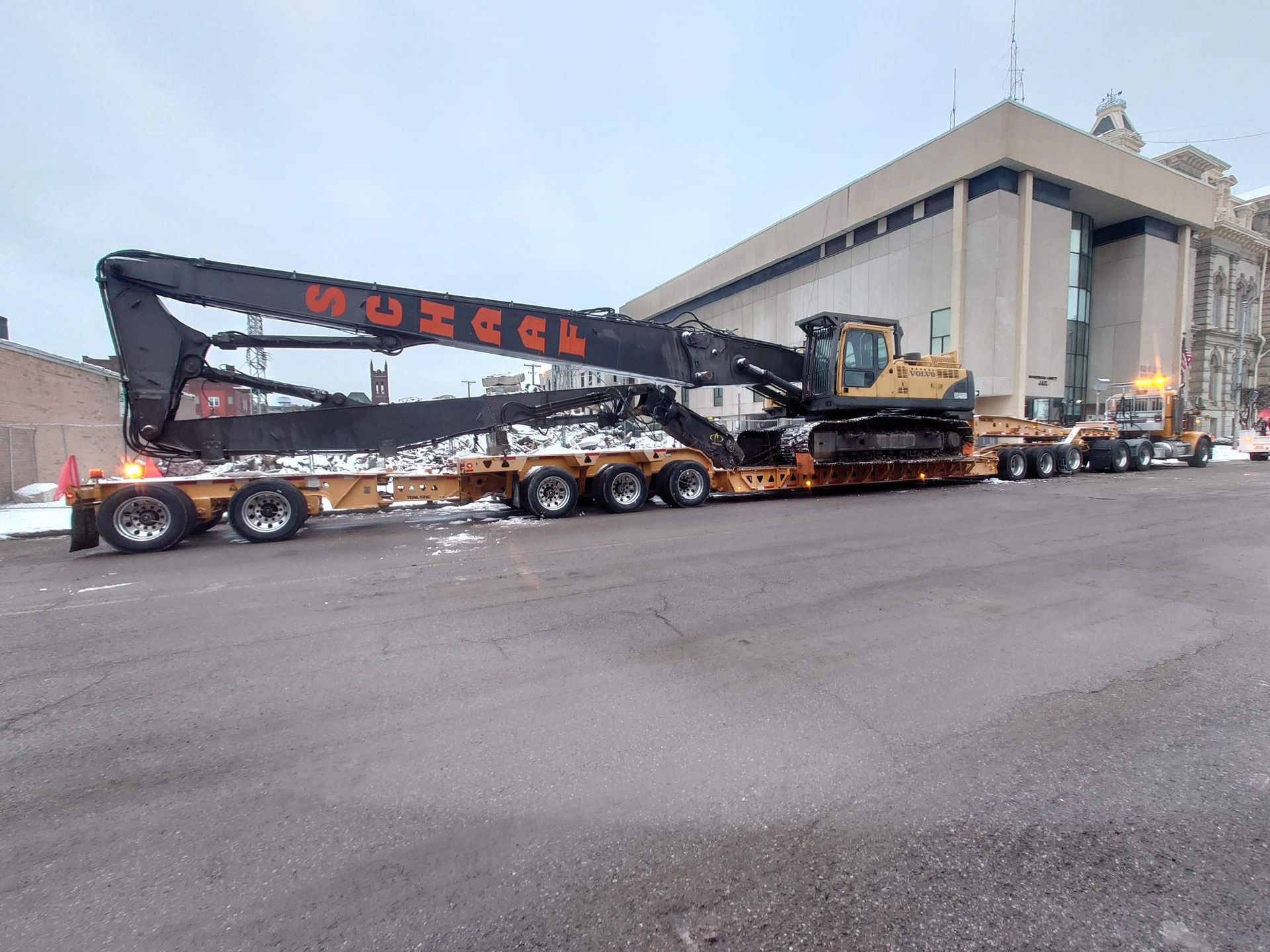
- High-reach excavators for upper-level dismantling
- Standard excavators with hydraulic thumbs
- Hydraulic breakers and processors
- Roll-off containers and hauling equipment
- Water trucks or misting systems for dust control
This equipment allows crews to dismantle a structure methodically rather than all at once.
The demolition method
In a controlled demolition, crews typically work from the top down, removing unstable sections first and reducing the structure in stages. Materials are separated where possible for recycling or disposal. Operators and supervisors monitor structural movement throughout the process. Safety meetings, communication protocols, and continuous site oversight are essential because conditions can shift quickly as debris is removed.
On large municipal or emergency-response jobs, that work also has to stay aligned with the broader public safety plan.
Case Reference: Jefferson Apartments Demolition
The Jefferson Apartments fire in Squirrel Hill is a clear example of why professional demolition matters after a major building fire. CBS Pittsburgh reported that the four-alarm fire broke out on September 9, 2025 at 8:30 AM, and that a large portion of the roof and part of the front of the building collapsed as crews battled the blaze. Because of those collapses, firefighters were pulled out of the structure and continued suppression efforts from outside.
In the days that followed, the City of Pittsburgh declared a local Disaster Emergency in response to the fire at the Jefferson Apartments on Forward Avenue, allowing the city to coordinate resources and accelerate response efforts. The city’s public statement made clear that the fire had destroyed the building and required an organized emergency response.
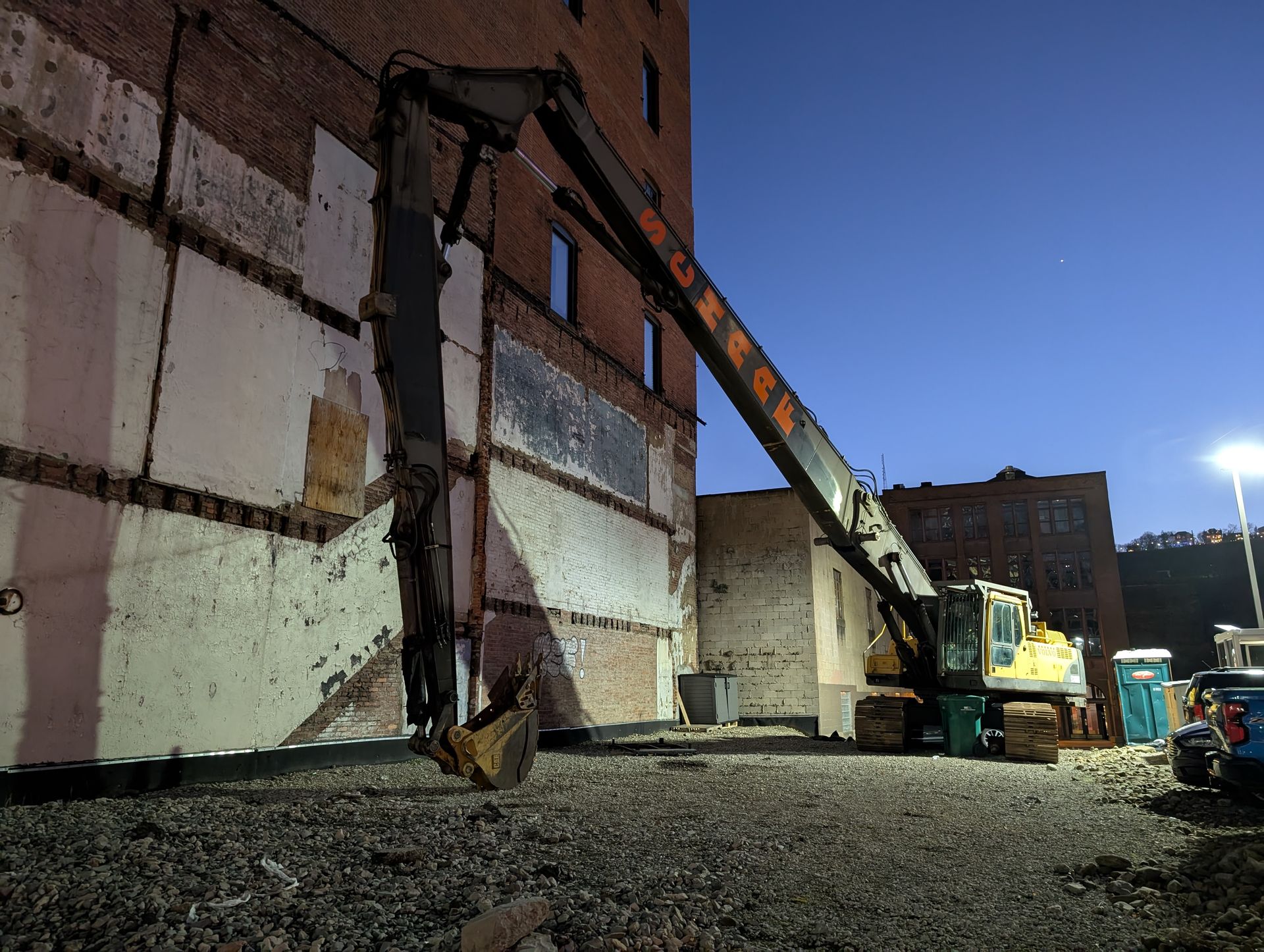
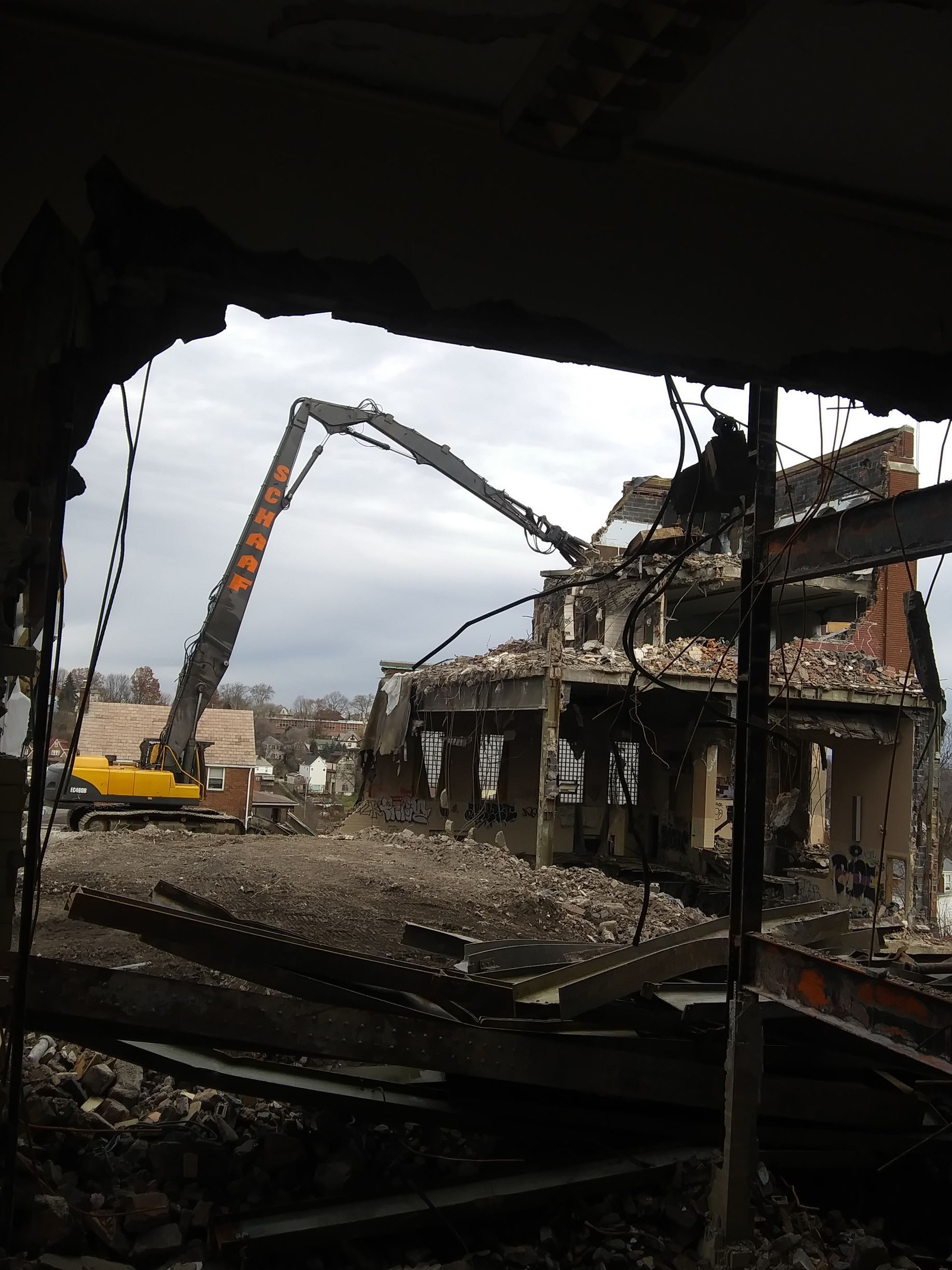
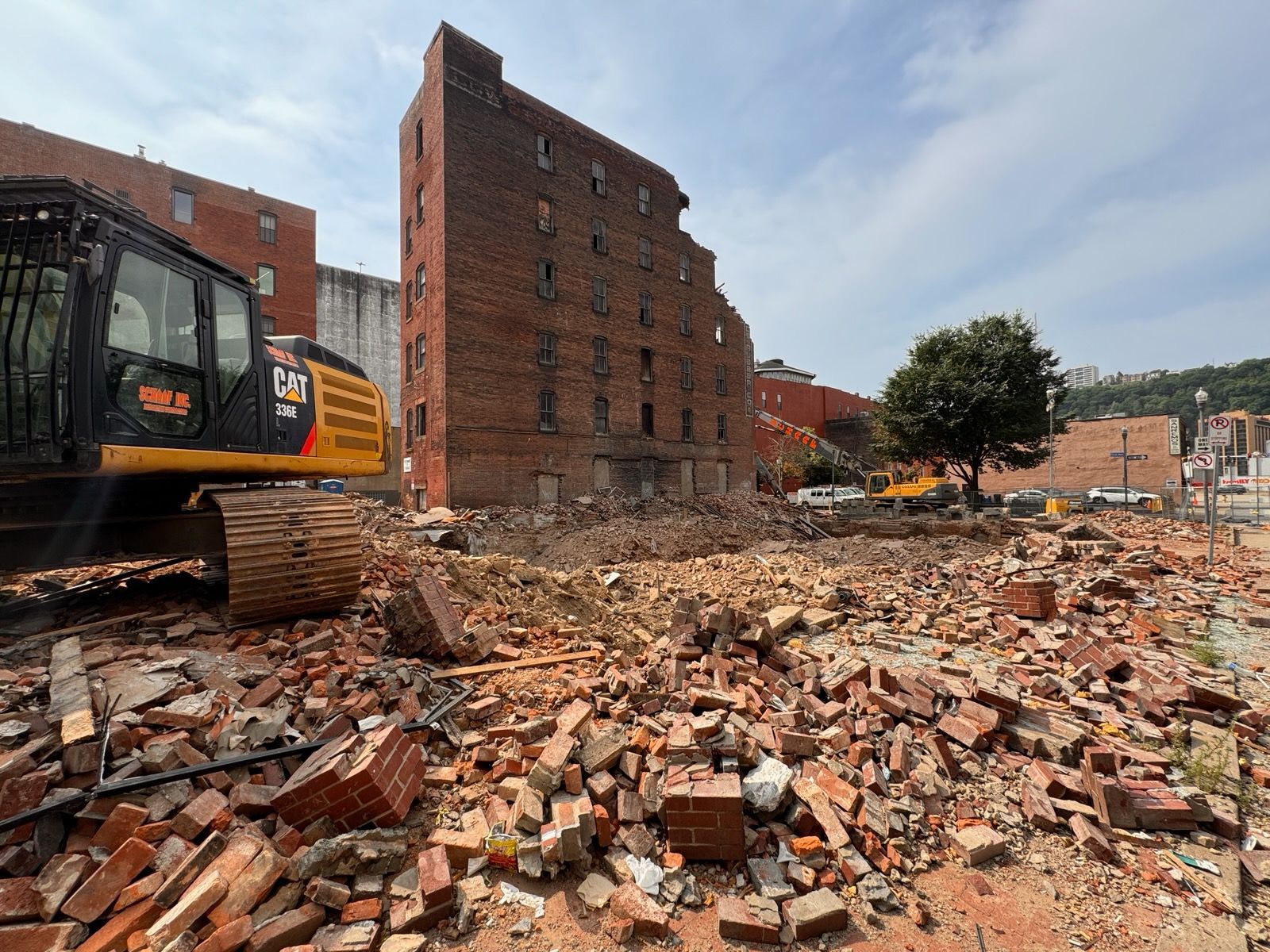
Coverage from WTAE reported that the demolition permit was issued to Schaaf Excavating Contractors and that demolition could begin quickly once approvals and site coordination were in place. TribLive later reported that demolition was underway with Schaaf equipment, including a crane and lighting systems positioned at the fenced-off site.
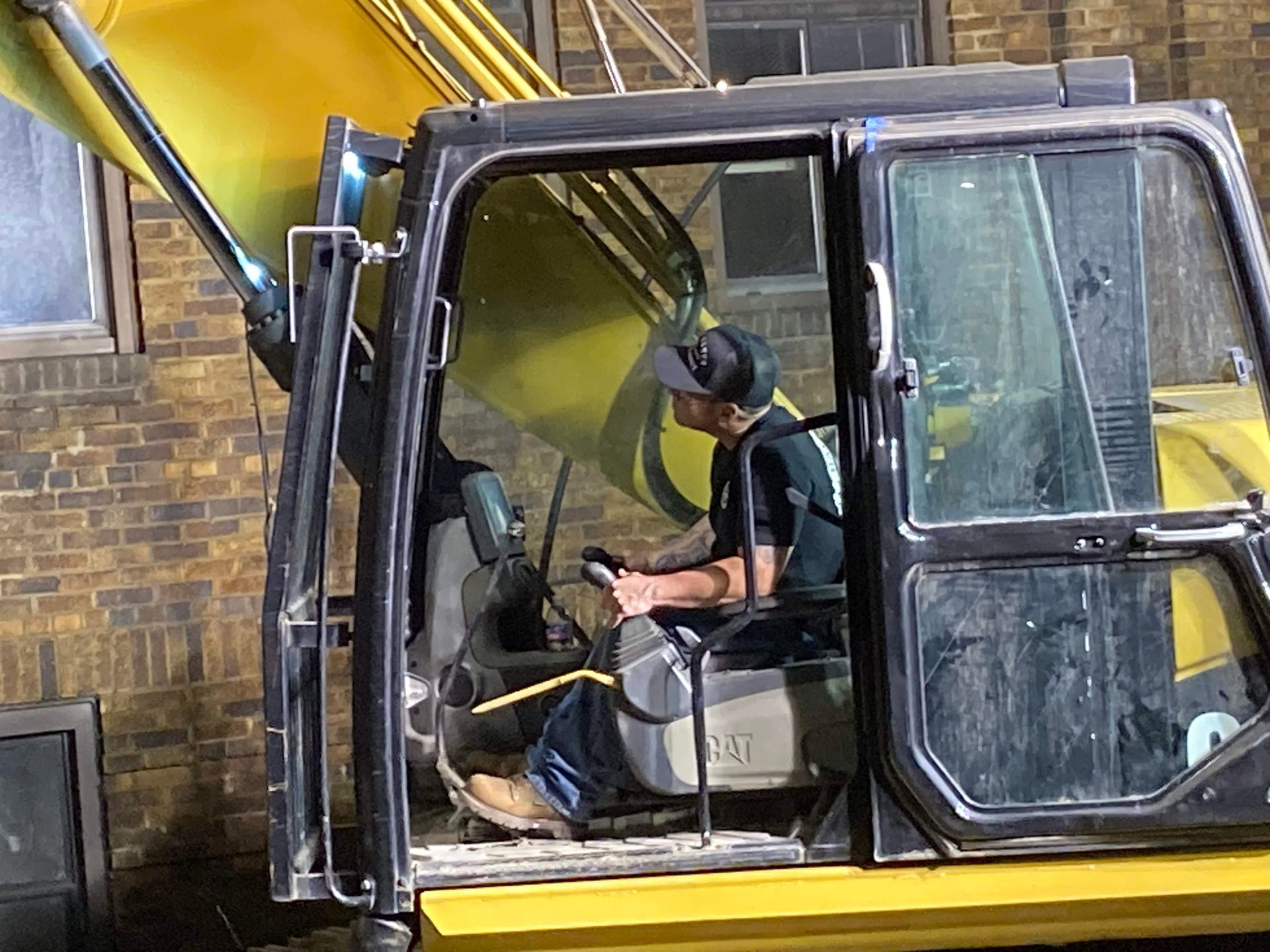
Demolition took about a week, and then extended time for debris removal, with our demolition team working from 7pm to 6am until the job was finished. This schedule for our workers was important for efficiency and pedestrian safety.
The Pittsburgh Post-Gazette’s reporting adds an important detail about how this kind of work is handled in practice. According to the Post-Gazette, Tim Schaaf said that brick walls on the first floor were intentionally left standing for a period to deter trespassers and to help keep debris from being kicked up by the wind, a common practice on similar projects. That detail reflects the kind of practical, site-specific judgment required on fire-damaged demolitions, especially in dense urban settings where safety and containment remain priorities even after the main structure has come down.
Since this structure was built in the 1920s, the wood framing contributed heavily to the reason the full brick building went up in a blaze.
For displaced residents, a project like this is never just a construction issue. It follows a serious loss and significant upheaval. That is one reason experienced demolition contractors need to keep the process clear, organized, and professionally managed. Schaaf Excavating Contractors’ role is to help stabilize the site, remove the unsafe structure, and make the next phase of recovery easier for property owners and public officials to navigate.
Why Experience in Fire-Damaged Demolition Matters
Experience matters because fire changes everything about how a building behaves. A contractor needs to understand how heat, collapse, and suppression water affect structural integrity. They need to know how to approach partially collapsed sections without creating additional failure. They also need the personnel, equipment, and judgment to work safely in city environments where neighboring buildings, traffic, and public access are constant concerns.
Just as important, experienced contractors know how to coordinate with municipalities. The Jefferson Apartments response involved city action, emergency declarations, permitting, fencing, and staged demolition in a highly visible urban area. Contractors who have done significant work for the City of Pittsburgh understand those expectations and know how to execute within them. That experience helps keep projects moving while maintaining compliance, safety, and communication.
What Property Owners Should Do After a Severe Fire
After a major fire, property owners and managers should focus on a few practical steps.
First, secure the site and restrict access. Fire-damaged buildings should not be entered unless emergency personnel or qualified professionals determine it is safe.
Second, coordinate with your insurance carrier and document the loss carefully. Major fire events often involve multiple parties, including adjusters, investigators, engineers, and municipal officials.
Third, bring in an experienced structural demolition contractor early. Even before demolition begins, a qualified contractor can help evaluate access, site conditions, utilities, equipment needs, and the likely path forward.
Fourth, do not delay action if the structure is compromised. The longer an unstable building sits, the greater the risk of trespassing, falling debris, weather-related deterioration, and added liability.
Contact Schaaf For Demolition in Pittsburgh
From single-family homes to large multi-unit buildings, Schaaf Excavating Contractors has the experience and equipment to safely remove fire-damaged structures and prepare sites for what comes next.
If you are dealing with a fire-damaged residential or commercial structure, contact Schaaf Excavating Contractors for a professional site evaluation and demolition plan.

Author: Tim Schaaf
Owner & Founder of Schaaf Excavating Contractors.