When Does a Commercial Demolition Project Need Engineering Review?
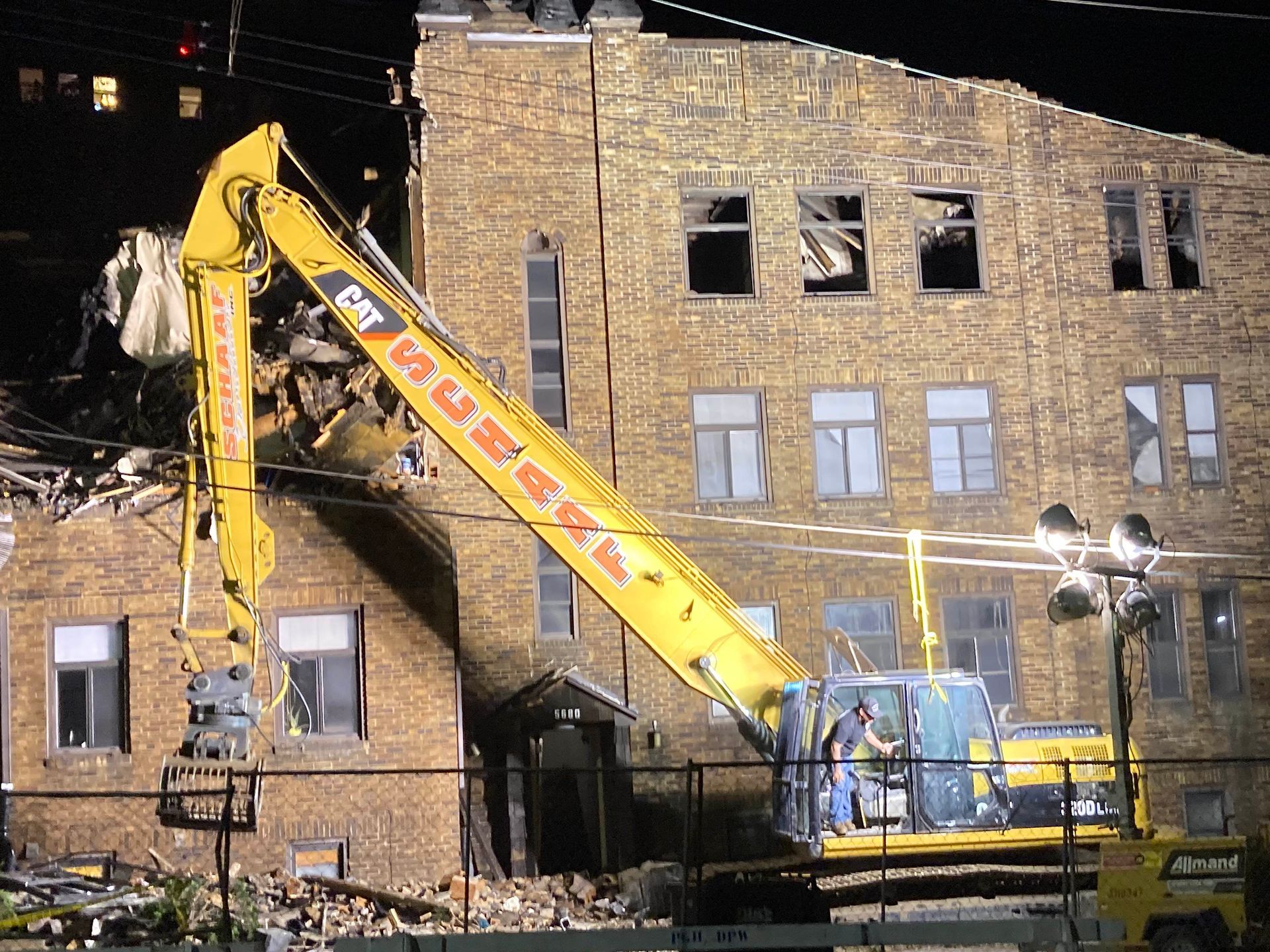
Commercial demolition is not just “tear it down and haul it away.” Older commercial buildings, tight urban sites, shared walls, utility connections, public sidewalks, basements, foundations, and structural damage can all change how a project needs to be planned.
Not every demolition project needs a full engineering review. Some are straightforward enough to move forward with standard permitting, utility coordination, asbestos review, and contractor planning. Others involve structural or site conditions that should be carefully reviewed before work begins.
Schaaf Excavating Contractors helps Pittsburgh-area commercial property owners, developers, municipalities, and facility managers evaluate site conditions, permitting needs, demolition logistics, and safety concerns before work begins. When a project appears to involve structural stability, adjacent buildings, public safety, or temporary support, engineering input may be required as part of the plan.
What Is Engineering Review in Commercial Demolition?
An engineering review is a technical evaluation of the building, site, or demolition plan. It may involve a structural engineer, design professional, or other qualified expert reviewing conditions that could affect safety or stability.
In commercial demolition, engineering review may look at:
- Building stability
- Load-bearing walls, beams, columns, and roof systems
- Shared walls or party walls
- Adjacent structures
- Retaining walls
- Foundation or basement conditions
- Partial demolition sequencing
- Temporary shoring or bracing needs
- Public safety risks
- Unusual demolition methods
A demolition contractor does not replace an engineer. However, an experienced contractor can often recognize when a project may need additional review before work starts.
When a Commercial Demolition Project May Need Engineering Review
The Project Involves Partial Demolition
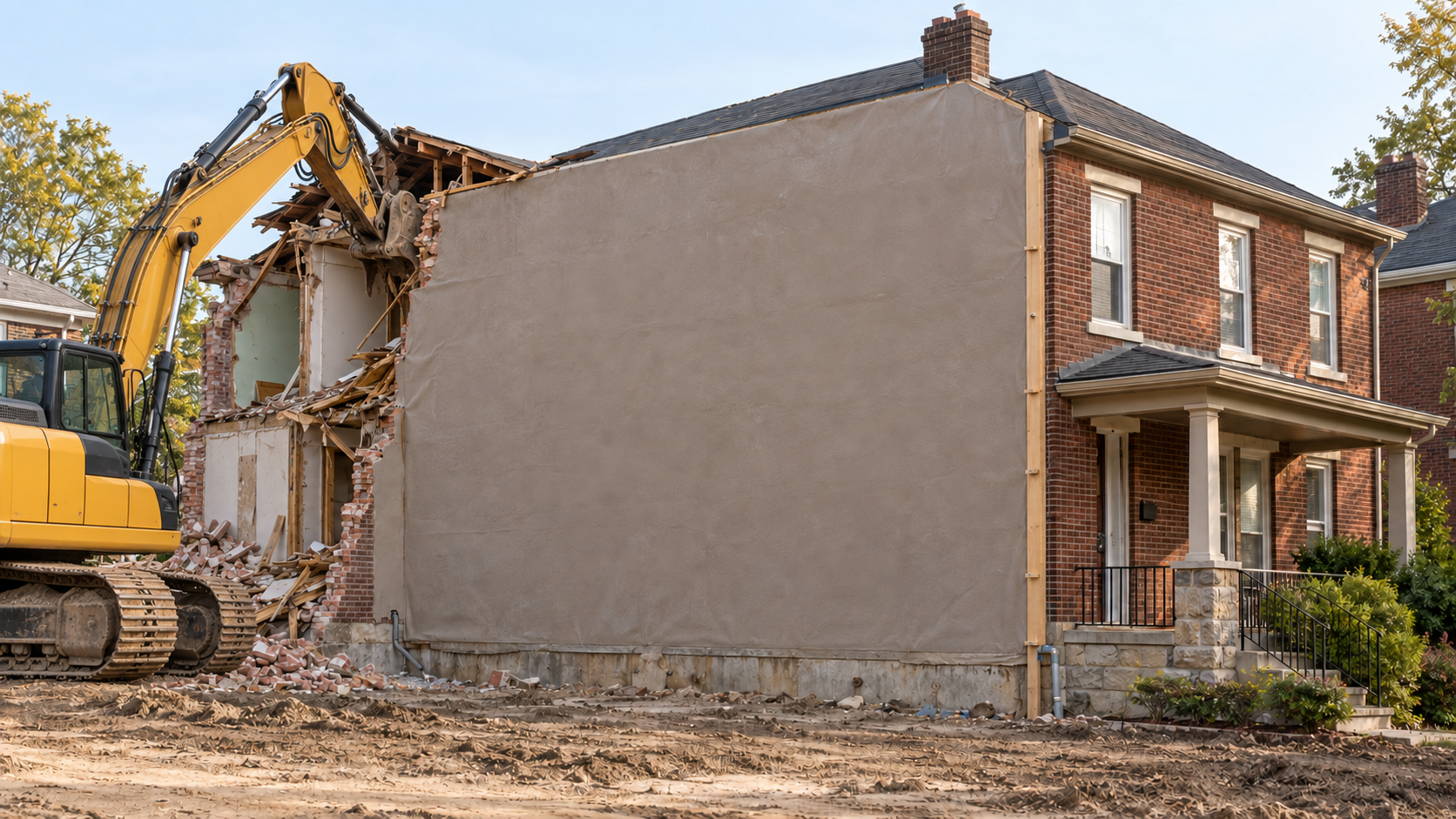
Partial demolition is one of the clearest situations where structural review may be needed before demolition. Unlike full demolition, partial demolition requires part of the building to remain in place.
This can include removing an addition while preserving the original building, keeping a façade, saving a foundation, removing part of a roof system, or cutting into interior structural elements. When part of the building is retained, the demolition plan must protect what remains.
If walls, framing, floors, foundations, or roof systems are connected to the areas being removed, engineering review may help determine the safest sequence of work and whether temporary support is needed.
The Building Shares Walls or Is Close to Other Structures
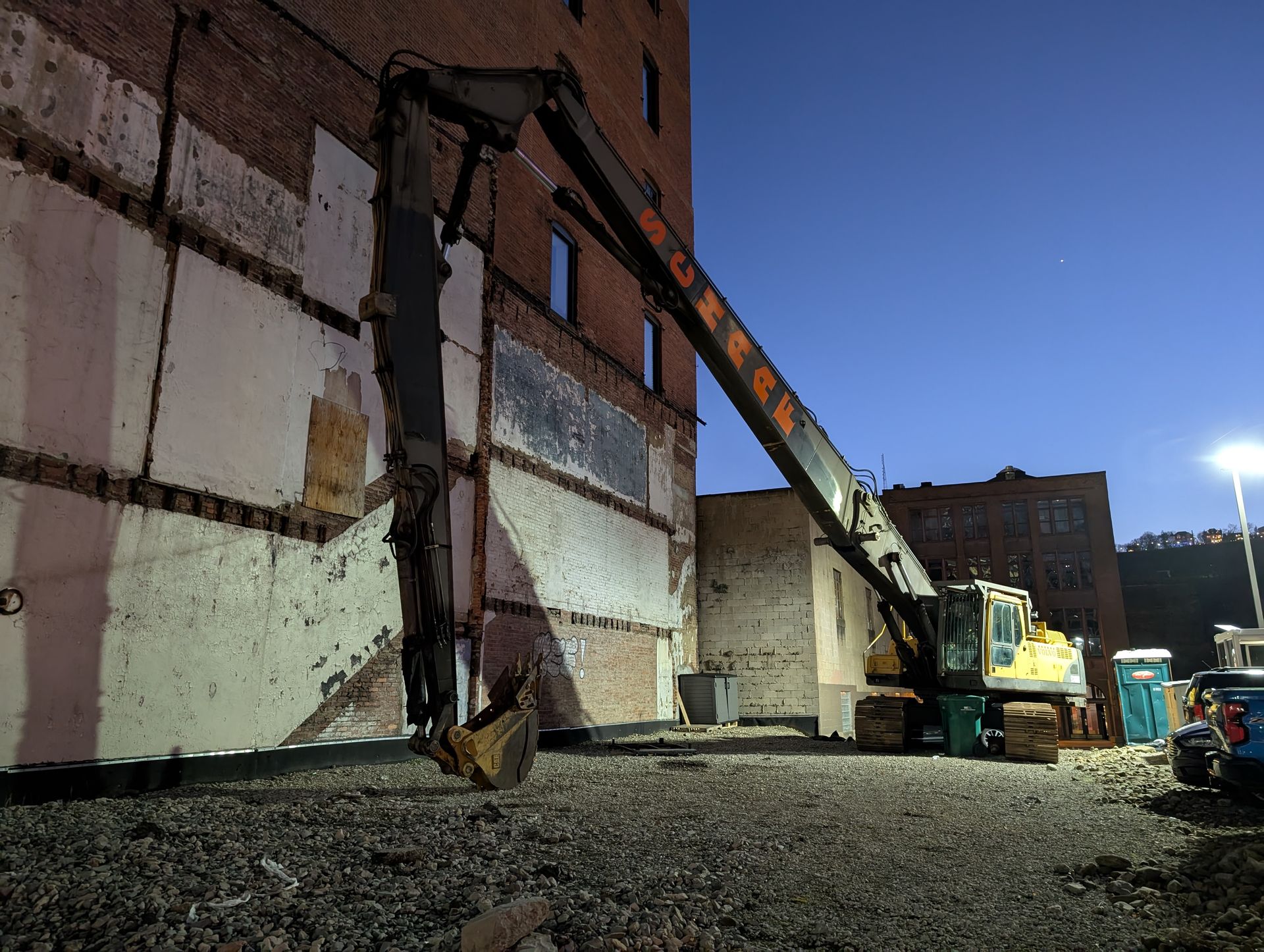
Commercial demolition in Pittsburgh often takes place near older masonry buildings, row-style commercial properties, narrow alleys, and active business districts. Some buildings share party walls, sit on zero-lot-line lots, or are close to neighboring foundations.
An engineering review may be needed when demolition could affect an attached building, a shared structural element, a neighboring foundation, a roof tie-in, or an adjacent wall. In these situations, the plan may need to address temporary bracing, controlled removal methods, vibration concerns, or protective measures.
Schaaf’s experience with commercial demolition in an urban environment helps property owners identify these concerns early.
The Building Is Structurally Damaged or Unsafe
Buildings damaged by fire, collapse, vehicle impact, storm damage, long-term vacancy, water intrusion, foundation failure, or deteriorated masonry may require a more cautious demolition plan.
If a building has been condemned or identified as unsafe, workers may not be able to enter certain areas safely. Equipment placement, debris removal, and demolition sequencing may also need to be adjusted.
Engineering review may help determine whether walls, floors, or roof sections are stable enough to remain in place during demolition, or whether remote demolition, bracing, or stabilization should be considered.
Demolition Could Affect Public Streets, Sidewalks, or Utilities
Commercial demolition near streets, sidewalks, alleys, utilities, or active businesses can involve public safety concerns beyond the building itself.
This may include sidewalk closures, pedestrian protection, traffic control, overhead power lines, gas service, water lines, sewer connections, and demolition near public rights-of-way.
Municipalities may request additional documentation when public safety is involved. That could include a site plan, utility confirmation, traffic control plan, pedestrian protection plan, or demolition sequence. This does not mean every project near a sidewalk needs engineering review, but public access and utility concerns can make the project more complex.
The Project Requires Shoring, Bracing, or Temporary Support
Any project involving shoring, bracing, or temporary support should be reviewed carefully. Temporary support may be needed to stabilize a wall, hold up a façade, protect a neighboring structure, support a remaining building section, or prevent movement around a basement or foundation.
This is one of the strongest reasons to involve engineering professionals. Temporary support systems need to fit the conditions they are supporting. If a wall, structure, or soil condition could move during demolition, the plan should account for that risk before work begins.
The Building Has a Basement, Deep Foundation, or Retaining Wall
Many Pittsburgh-area commercial and industrial buildings have basements, grade changes, retaining walls, older foundations, and sloped lots. These below-grade conditions can affect the demolition plan.
A project may need to account for basement backfill, foundation removal, retaining walls near property lines, adjacent pavement, sidewalks, neighboring structures, and future redevelopment plans.
If a retaining wall supports soil near another property, a sidewalk, a roadway, or a building, demolition should be carefully planned. Schaaf’s excavation and sitework experience helps connect demolition planning with what happens after the structure is removed.
The Demolition Is Part of a Larger Redevelopment Project
Commercial demolition is often the first step in redevelopment. A property owner may be clearing a site for new construction, preparing a building for adaptive reuse, removing an obsolete structure, or coordinating with architects, engineers, developers, and general contractors.
Engineering review may be tied to the next phase of work. The project team may need to preserve foundations, protect slabs, remove utilities in a specific sequence, or prepare the site for excavation and grading.
A demolition contractor with excavation experience can help identify what needs to be removed, what needs to remain, and how demolition should support the next phase.
The Permit Office Requests Additional Documentation
Local demolition requirements vary by municipality, building condition, and scope of work. A demolition permit is required for full demolition, partial demolition, and non-structural interior demolition of residential or commercial buildings and structures in Pittsburgh. Pennsylvania’s Uniform Construction Code guidance also states that a permit is required before full or partial demolition of a building or structure.
Allegheny County notes that property owners, representatives, or contractors must file necessary permits in the municipality where the work is performed. Depending on the scope, a permit reviewer may request drawings, a demolition plan, a site plan, an engineer letter, a shoring plan, or other documentation.
A project may need a demolition permit without needing a separate structural engineer. A more complex project may need both.
Does Interior Commercial Demolition Need an Engineering Review?
Sometimes. Non-structural interior demolition may be straightforward when the work is limited to finishes, fixtures, flooring, ceiling systems, cabinetry, and non-load-bearing partitions.
However, commercial interior demolition may require additional review when it affects structural systems. This can include removing load-bearing walls, cutting concrete slabs, removing mezzanines, altering stair openings, removing structural steel, changing roof or floor supports, demolishing elevator shafts, or removing mechanical equipment supported by structural framing.
Before removing major interior components, the contractor should confirm whether the work is truly non-structural or requires additional review.
Engineering Review vs. Permit Review: What’s the Difference?
Permit review and engineering review are related but not the same thing.
Permit review is the municipality’s review of the proposed work to determine whether it meets local requirements. An engineering review is a technical evaluation of structural stability, sequencing, temporary support, and site-specific risks.
They can overlap. A permit office may request engineering documentation for a complex project. An engineer may prepare information that supports a permit application. However, a demolition permit does not always require a separate engineering review.
What Schaaf Looks at Before Commercial Demolition Begins
Before commercial demolition begins, Schaaf looks at practical details that affect safety, cost, schedule, and permitting, including:
- Building size, age, and construction type
- Whether the work is full, partial, interior, or selective demolition
- Distance to adjacent buildings
- Shared walls or nearby foundations
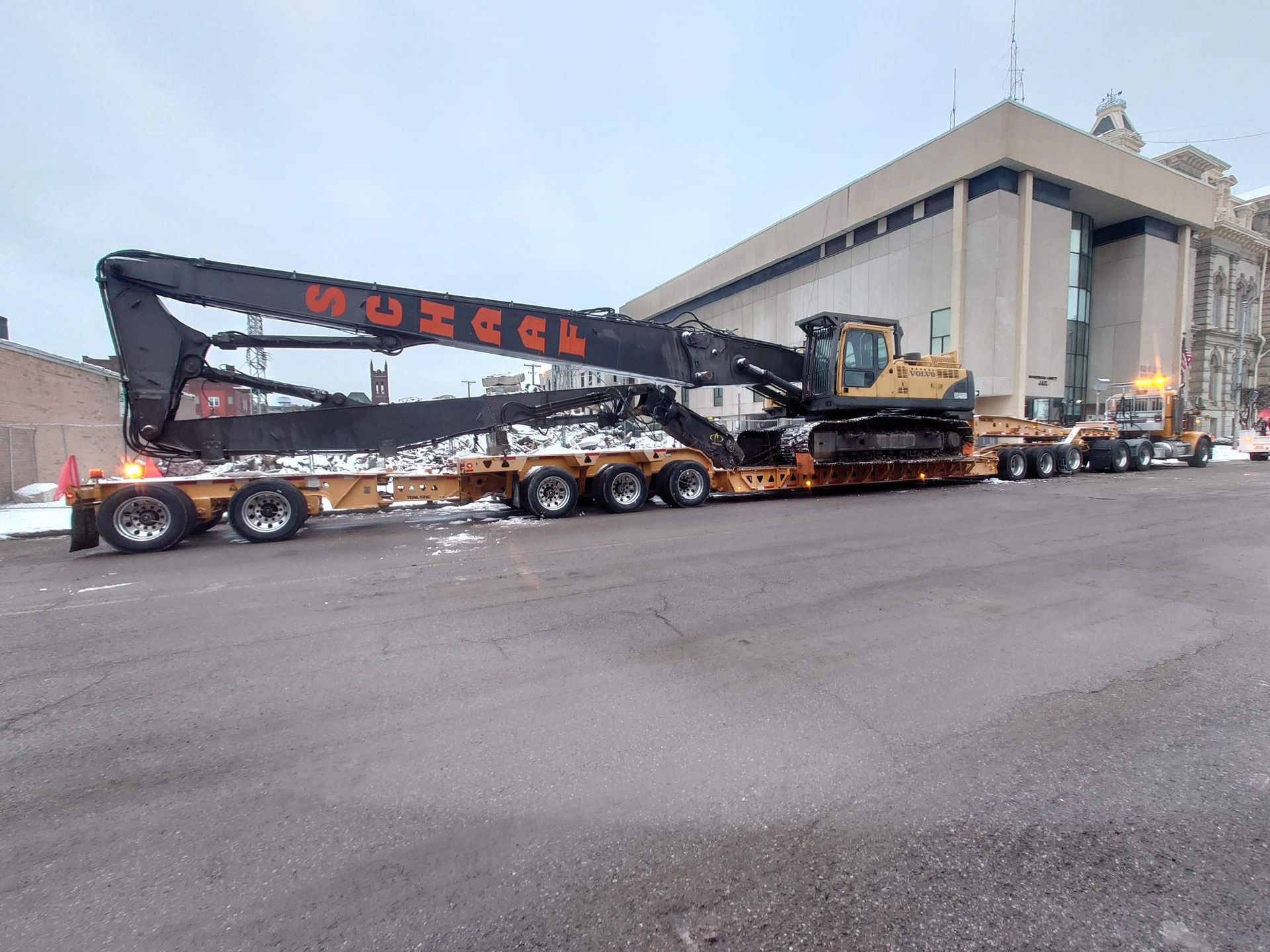
- Equipment and dumpster access
- Utility disconnection needs
- Basements, foundations, retaining walls, and grade changes
- Public sidewalk, street, and pedestrian concerns
- Drainage and site conditions
- Hazardous material concerns
- Debris removal and disposal logistics
Whether the next phase involves excavation, grading, or redevelopment
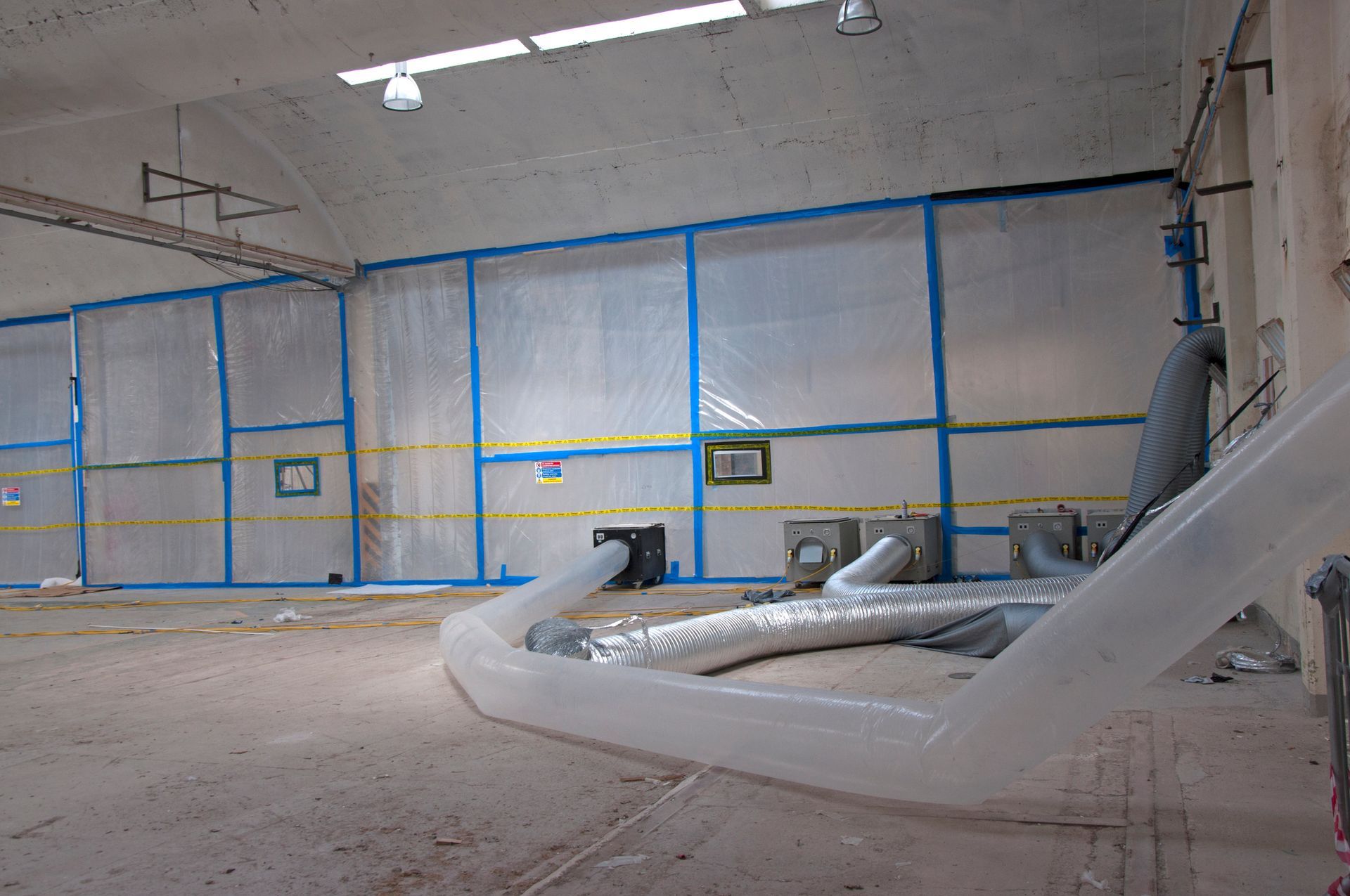
Asbestos review is also an important part of planning. Allegheny County guidance says all demolitions require an asbestos survey and notification to ACHD and EPA 10 days before demolition, even when no asbestos is present. Depending on the findings, additional asbestos abatement requirements may apply.
Why It’s Better to Identify Engineering Needs Early
Engineering questions are best addressed before demolition begins. Waiting can lead to permit delays, change orders, unsafe site conditions, damage to adjacent structures, utility conflicts, work stoppages, higher costs, and scheduling problems.
Early review also helps with redevelopment planning. If an engineer letter, shoring plan, or revised demolition sequence is needed, it is better to know before crews, equipment, dumpsters, and subcontractors are scheduled.
The goal is simple: understand the project clearly before work begins so demolition can be planned safely and efficiently.
Talk to Schaaf Before Starting a Commercial Demolition Project
If you are planning a commercial demolition project in Pittsburgh or the surrounding area, Schaaf Excavating Contractors can help you evaluate the site, understand the demolition scope, coordinate the right permits and inspections, and determine whether engineering review may be needed before work begins.
Whether you are removing an old commercial building, preparing a site for redevelopment, planning selective demolition, or dealing with an unsafe structure, it is better to identify structural, permitting, utility, and access concerns early.
Contact Schaaf Excavating Contractors to discuss your building, timeline, and project goals before demolition begins.
FAQs About Commercial Demolition Engineering Review
Does every commercial demolition project need an engineering review?
No. Some straightforward demolition projects may only need standard permitting, utility disconnection, asbestos review, and contractor planning. An engineering review is more likely when the project involves structural concerns, partial demolition, adjacent buildings, public safety risks, or temporary support.
Who determines whether engineering review is needed?
The need may be identified by the demolition contractor, property owner, architect, municipality, permit reviewer, or structural engineer. If the scope raises structural or safety concerns, it is better to address those questions early.
Is partial demolition more likely to require engineering review?
Yes. Partial demolition often requires more planning because part of the building remains in place. If walls, framing, floors, foundations, or façades are to be preserved, the project may require structural review or a more detailed demolition sequence to avoid unsafe building demolition.
Does commercial interior demolition need an engineering review?
Not always. Removing finishes, fixtures, ceilings, flooring, and non-load-bearing partitions may not require engineering review. However, removing structural walls, steel, concrete, mezzanines, shafts, or major mechanical supports can require additional review.
Can Schaaf help determine whether an engineer is needed?
Yes. Schaaf can review the demolition scope, site conditions, access issues, and surrounding structures to help determine whether the project appears straightforward or warrants additional engineering input.

Author: Tim Schaaf
Owner & Founder of Schaaf Excavating Contractors.